

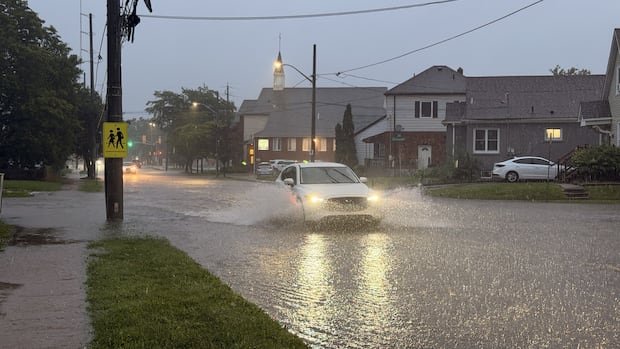

The aftermath of recent flooding in St. Catharines, Ontario, is evident with debris like couches, mattresses, and drywall piled up on the streets, a result of multiple severe storms occurring within a short span. Mayor Mat Siscoe highlighted that the city faced three major storm events in just 11 to 12 days, the most significant in its history.
While the initial storm was managed by the stormwater system, subsequent storms hit saturated ground, overwhelming the system and leading to extensive overland flooding and sewer backups into residences, some experiencing sewage intrusion. Farmer Dave White of White Orchard Farms near St. David’s recounted how recent storms submerged his garlic fields, though timely harvesting prevented crop loss. Learning from past experiences, White took proactive measures to ensure water drainage from his fields.
White, who also operates a restoration business, mentioned the challenges faced by homeowners dealing with recurring floods, indicating the need for substantial investment in upgrading drainage and sewage infrastructure. Mayor Siscoe emphasized that the city’s aging infrastructure, primarily built over 150 years ago, struggled to cope with the recent extreme rainfall events.
Adam Keane, an engineering manager, explained that the storms exceeded the capacity of the drainage infrastructure, designed for lesser rain levels. The consecutive storms pushed the system beyond its limits, causing overflow and water saturation issues. Phil Lambert, Niagara region’s director of water and wastewater services, clarified that the flooding wasn’t solely due to new developments but rather the overwhelming volume of rainwater received during the storms.
To address future flood risks, St. Catharines aims not only to replace aging pipes but also to enhance flood resilience through park redesigns and development regulations requiring stormwater retention plans. Mayor Siscoe stressed the need for additional provincial and federal funding to facilitate comprehensive infrastructure upgrades, acknowledging the prolonged timeframe and financial constraints for the city to undertake the necessary work independently.