

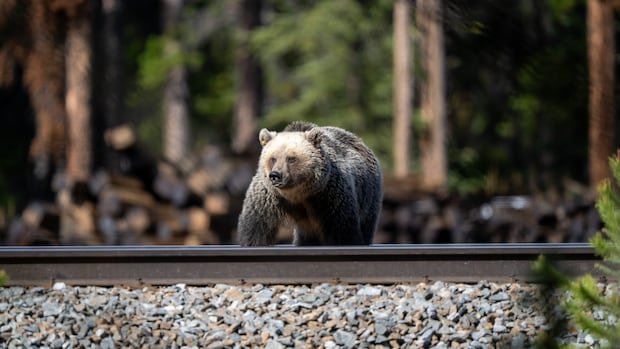

A recent viral encounter with a grizzly bear and new research findings are emphasizing the significance of leash laws for dogs during hiking activities.
A woman is currently facing potential fines of up to $25,000 following the posting of a TikTok video in July that garnered millions of views. The video captures a man using bear spray to deter a grizzly bear while a small off-leash dog runs around in the vicinity.
The footage features grizzly bear No. 142, a prominent female bear, peacefully walking along the Taylor Lake trail in Banff National Park without displaying any signs of aggression.
The woman behind the video is set to appear in court in Canmore later this month.
A recently published peer-reviewed study, titled “The Canine Conundrum: Is a Dog a Help or Hindrance in Bear Country?” delved into conflicts similar to those depicted in the viral video by examining 326 documented human-bear interactions involving dogs from 1901 to 2023.
The study revealed that 54% of conflicts were instigated by dogs. Among the incidents analyzed, five individuals and 56 dogs lost their lives, and 170 people sustained injuries.
According to Lana Ciarniello, an independent researcher involved in the study, hiking with at least one companion reduces the likelihood of negative bear encounters by 50%.
Nevertheless, the study indicated that the presence of dogs escalates the chances of negative bear encounters due to the disruptive element that dogs introduce to recreational settings.
The impetus for the study stemmed from a tragic incident in 2023 when a grizzly bear in the Red Deer Valley area of Banff National Park fatally attacked two hikers and their dog.
The study underscored that conflicts between dogs and bears not only impact owners, their pets, and the bears involved but also have broader implications for bear conservation.
The research underscored that injuries were significantly more frequent for individuals with off-leash dogs compared to those with dogs on-leash, with more bear encounters involving off-leash dogs.
Ciarniello expressed hope that hikers adhere to on-leash dog regulations, which are legally mandated in Canada’s national parks, and consider implementing dog restrictions in critical grizzly bear habitats.
In an internal report, Parks Canada wildlife experts proposed “enhanced dog restrictions” throughout Banff National Park following the tragic incident in the Red Deer Valley area in 2023. The report suggested discouraging dog owners from bringing their pets to the park.
The report highlighted the critical need for reviewing dog-related policies and regulations in Banff National Park and other protected areas, emphasizing the inherent risks associated with dogs in wildlife encounters.
As human visitation to national parks increases, the report cautioned that negative dog-wildlife interactions are foreseeable, stressing the importance of complying with leash regulations.
The report revealed that predatory grizzly bear attacks are exceedingly rare, with a majority of human-bear conflicts attributed to surprise encounters or dog involvement.
The report cited examples from U.S. national parks where dogs are prohibited on trails and in backcountry areas, noting discrepancies in Canadian laws regarding dog access to national parks.
Kim Titchener, founder of Bear Safety & More, advised dog owners to assess their pets’ behavior around wildlife before taking them into natural habitats with large carnivores like bears, moose, or elk.
Titchener emphasized the need for hikers to prioritize safety in bear encounters by stepping off the trail, carrying bear spray, keeping dogs on-leash, and refraining from filming to focus on their well-being.
She cautioned against prioritizing video recording over personal safety during bear encounters, urging individuals to remain calm and attentive in such situations.