

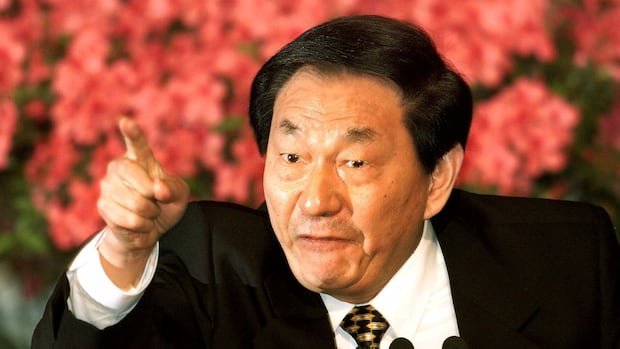

Former Chinese premier Zhu Rongji has passed away at the age of 97, as reported by state media. The official Xinhua news agency announced that Zhu succumbed to illness in Beijing at approximately 11 a.m. on Wednesday. Known for his bold and decisive leadership, Zhu played a pivotal role in driving China’s economic growth by implementing significant reforms in the 1990s and steering the country into the World Trade Organization.
Despite facing exile in rural areas for advocating reforms in other communist nations, Zhu spearheaded a series of profound changes during his tenure as premier from 1998 to 2003. His relentless push for efficiency and profitability in state-owned enterprises led to millions of job cuts but propelled China to become the world’s second-largest economy after the United States in 2010.
Acknowledged for his instrumental role in China’s economic transformation, Zhu’s initiatives, including securing China’s WTO membership, were crucial in establishing the country as a global economic powerhouse. These reforms contributed to sustaining economic growth above eight percent annually from 2000 to 2010, peaking at 14.2 percent in 2007.
Renowned for his no-nonsense approach, Zhu earned the monikers Boss and Madman Zhu for his uncompromising stance against corruption and inefficiencies. His commitment to accountability was exemplified when he famously remarked in 1998 that he had prepared 100 coffins, reserving one for himself and the rest for corrupt officials.
Zhu, who held the third-highest position in the Communist Party hierarchy, was instrumental in curbing inflation as a deputy premier in the 1990s. He navigated complex negotiations to secure China’s WTO membership, leveraging free trade as a tool to dismantle protectionist measures by local officials and foster a more competitive business environment.
Additionally, Zhu kickstarted China’s home ownership boom in 1998 by initiating the sale of state-owned company apartments, leading to a significant shift towards private homeownership in urban areas. Despite advocating for profit-oriented reforms in various sectors, Zhu remained steadfast in maintaining government ownership.
Born in Mao Zedong’s home province of Hunan in 1928, Zhu’s career endured setbacks, including political exiles and manual labor during the Cultural Revolution. However, his resilience and strategic acumen propelled him to prominence, eventually earning him key leadership positions in Shanghai and later in the central government.
Known for his humility and willingness to accept responsibility for government shortcomings, Zhu’s legacy as a reformist leader and economic strategist continues to shape China’s trajectory on the global stage.