

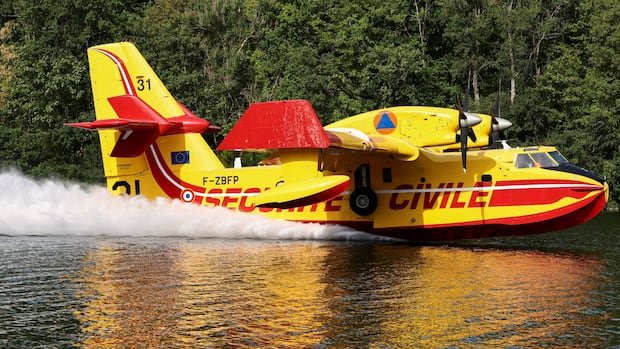

Amid a challenging wildfire season in Canada, the United States, and Europe, there is mounting pressure on the manufacturer of the Canadair “Super Scooper” water bombers to ramp up production. De Havilland, based in Calgary, has taken the uncommon step of resuming Canadair production after acquiring the program from Bombardier in 2015.
The Canadair aircraft, renowned worldwide for their firefighting capabilities, are meticulously handcrafted in Calgary using components sourced across Canada. The revival of the production line, announced in 2022, is progressing well, with the first two planes expected to be completed and delivered by early 2028.
With current shortages and aging fleets, Canadian and European leaders are eager to acquire these aircraft. Originally designed in the 1960s for combating wildfires in the Canadian wilderness, the Canadair planes are adept at navigating challenging terrains and swiftly scooping up water from lakes, rivers, and oceans to douse flames.
Political figures in France, Spain, and various Canadian provinces have criticized the insufficient availability of operational Canadairs, citing challenges in dealing with extreme weather and wildfires. De Havilland is feeling the pressure to meet the soaring demand for these aircraft, with considerations being made for a potential second production line to enhance output.
Experts emphasize the urgent need for additional Canadair production lines to meet the global demand fueled by escalating wildfire threats amid climate change. The current wait time for new orders stands between 2032 and 2033, as De Havilland works to fulfill existing orders and expand production capacity.
The looming prospect of foreign competitors entering the firefighting aircraft market poses a risk to Canadian jobs and manufacturing. To safeguard Canada’s position as a leader in firefighting technology, industry experts stress the importance of bolstering domestic production and meeting the growing demand for modern water bombers.
In response to the escalating wildfire crisis, a Senate report released in June recommends establishing a national fleet of advanced firefighting aircraft. While aerial units play a crucial role in wildfire suppression efforts, they are just one component of a comprehensive firefighting strategy that also includes prevention and mitigation measures.
The federal government’s commitment to enhancing wildfire response capabilities and collaborating with provinces and territories underscores the collective effort to address the escalating challenges posed by intensifying wildfire seasons.