

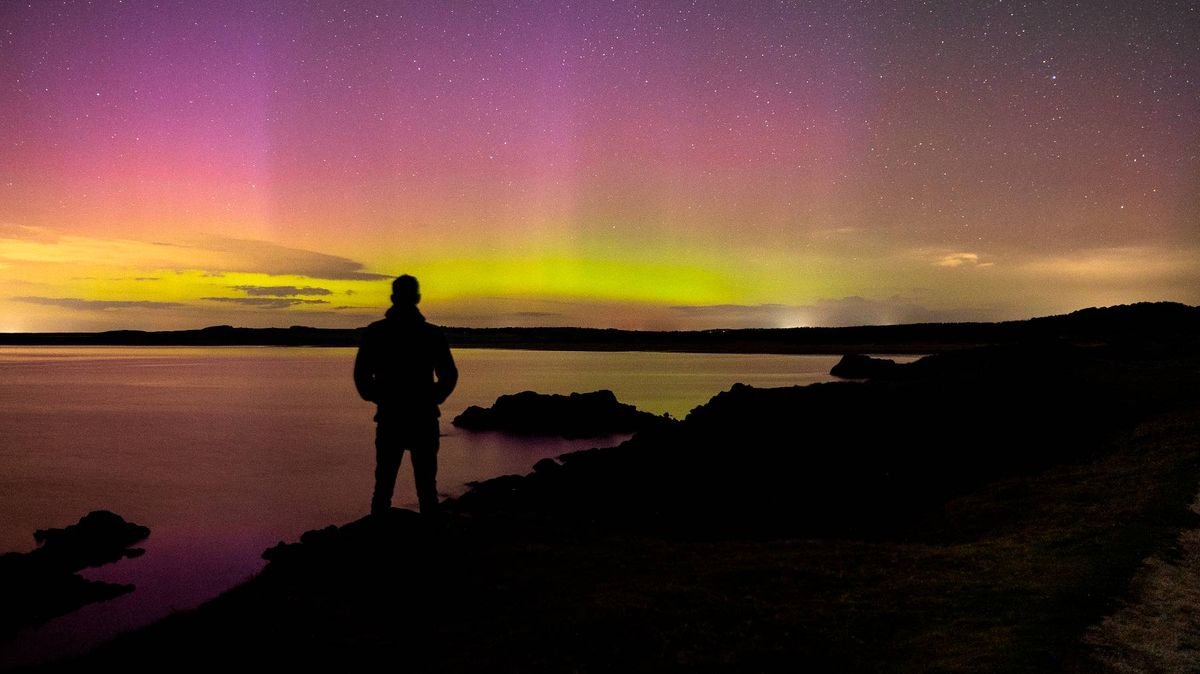

There is a heightened alert for the Northern Lights as meteorologists predict a “strong” geomagnetic storm that could bring this mesmerizing phenomenon closer to the UK.
The UK’s Met Office recently confirmed R3 radio blackouts due to intense solar flares on November 9 and 10. These occurrences can cause disruptions in high-frequency radio communications on the sunlit side of the Earth, affecting aviation and maritime activities.
Following a significant X1.7 solar flare yesterday, Coronal Mass Ejections might result in additional geomagnetic disturbances in the upcoming nights, potentially leading to a spectacular atmospheric show. The most intense activity is anticipated tonight, according to current projections.
Enthusiasts are optimistic about witnessing “powerful Northern Lights throughout this week” after the recent solar event. While the aurora was not visible last night, the Met Office hints at a possibility of G3 Strong storms tonight, particularly in northern latitudes above the UK.
The Met Office forecasts enhanced geomagnetic activity from a coronal mass ejection on Tuesday, increasing the chances of visible auroras across northern regions of the UK and possibly even further south under favorable conditions.
Geomagnetic activity is expected to persist until November 12, gradually subsiding thereafter, although the Met Office warns of potential future Earth-directed eruptions due to the complex nature of the region.
In the Southern Hemisphere, southern New Zealand and Tasmania could witness auroras on Tuesday night. These celestial displays occur when solar eruptions propel charged particles into space, interacting with Earth’s magnetic field during geomagnetic storms.
As the charged particles collide with atmospheric gases, they emit light, creating the mesmerizing auroras seen in the night sky. The peak aurora activity is forecasted around midnight on Tuesday, although cloudy skies may hinder visibility in many parts of Britain.
Clear intervals are expected in North Wales and northern England post-midnight, but moonlight could affect the viewing experience. For optimal aurora viewing, experts recommend finding a high vantage point with minimal light pollution for unobstructed views.
For the most up-to-date information on weather and aurora visibility, individuals are encouraged to check local forecasts and consider ideal viewing locations to maximize their chances of witnessing this natural spectacle.