

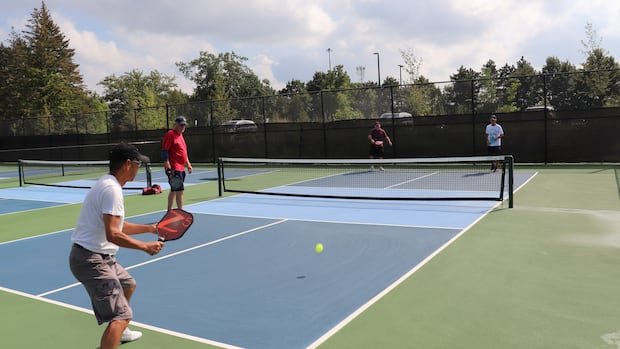

The competition for court time between tennis and pickleball players is intensifying across the country, with conflicts arising over public space usage. In Scarborough, Ontario, the conversion of two tennis courts into six pickleball courts sparked a petition from a disgruntled tennis player urging the city to reverse the decision. Similarly, a dispute between pickleball and tennis enthusiasts on Mayne Island, B.C., escalated to the provincial Supreme Court.
According to Matti Siemiatycki, a geography and planning professor at the University of Toronto, these local disputes reflect a broader issue of inadequate public recreational facilities for all sports. The scarcity of spaces, whether for hockey arenas, tennis courts, or parks, leads to fierce competition and potential inequalities in access.
Experts suggest that resolving these conflicts should not rely on the competitive nature of sports communities or solely on for-profit organizations. Instead, the focus should be on addressing the shortage of recreational facilities. Peter Donnelly, a retired professor from the University of Toronto, advocates for housing developers to include more recreational amenities in their projects, similar to the post-World War II public housing policies that integrated parks and community spaces.
As more people engage in racket sports like pickleball and tennis, the demand for outdoor recreational spaces is soaring. Both sports provide socially distanced outdoor activities, leading to increased participation. Private pickleball businesses are emerging to cater to this demand, converting spaces like churches and shopping malls into playing venues.
To fund local facilities, municipalities often rely on property taxes, but increasing taxes can be challenging politically. Alternative funding models like the “sin tax” approach used in the U.K. exist, but there is no one-size-fits-all solution. Balancing housing affordability and recreational spaces can be complex, but experts emphasize the importance of prioritizing public spaces for building active and healthy communities.