

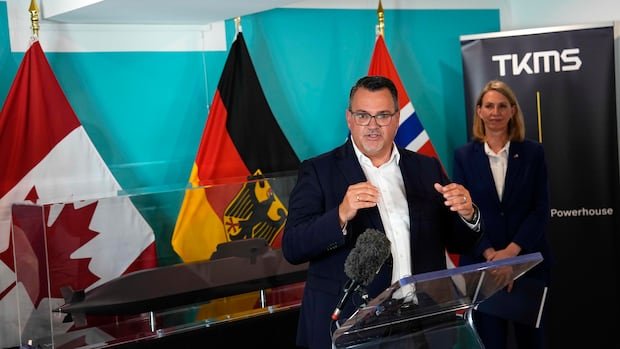

The CEO of ThyssenKrupp Marine Systems (TKMS), the German company expected to construct Canada’s new submarines, is advocating for enhanced collaboration among European shipbuilders. This initiative could have implications for Canada as its navy contemplates incorporating corvettes into its fleet.
Oliver Burkhard, TKMS’s CEO, emphasized the recent partnership between his company and the Spanish government-owned Navantia S.A. They are exploring joint naval projects, potentially including the production of TKMS submarine designs at Navantia’s shipyards in Spain. Burkhard stressed the importance of shipbuilders working together.
Burkhard highlighted the rising demand for warship construction, noting the industry shift from having time but no funds to now having resources but facing time constraints. According to a report by Imarc, the demand for warships is projected to increase by over five percent in the next decade.
Apart from submarines, the Canadian navy is currently building its long-awaited River-Class destroyers and has expressed the need for smaller, cost-effective, ice-capable corvettes. Irving Shipbuilding in Halifax is constructing the destroyers under the National Shipbuilding Program, which is concluding the construction of Arctic and Offshore Patrol Ships. Due to Canada’s lack of modern submarine building expertise, the planned 12 submarines will be constructed in Germany.
Burkhard, ahead of his visit to Ottawa, is engaging with companies collaborating with TKMS for Canada’s submarine program. The Carney government recently selected TKMS as the preferred submarine supplier and aims to finalize a full contract by the end of 2027, with Burkhard anticipating a swift agreement.
The potential export of TKMS’s MEKO A-100 corvette design to Canada for local construction was considered during the submarine bidding process. While this idea was not included in the submarine bid, Burkhard confirmed its contemplation, emphasizing the possibility of building these vessels in Canada with their design.
The Canadian navy identified the need for corvettes last year and is evaluating the role and capabilities such a warship would entail. Rob Huebert, a defense expert, underlined the importance of meeting military requirements over economic benefits, stressing the necessity for additional ships ahead of potential conflicts.
Huebert also praised the enhanced collaboration among European shipyards, particularly in submarine construction, citing the need for such partnerships. Burkhard likened the current shipbuilding market conditions to the 1960s when European aerospace companies formed Airbus due to empty order books, facing competition from U.S. defense contractors.
While acknowledging the complexity of establishing a maritime equivalent of Airbus, Burkhard suggested that the industry could spearhead such an initiative. He emphasized that industry cooperation could mirror the success of Airbus’s formation in the ’70s, independent of political influences. The necessity for closer partnerships among European defense companies was underscored in a study by the Center for Strategic and International Studies three years ago, highlighting the lack of cooperation despite increased defense spending in European countries.