

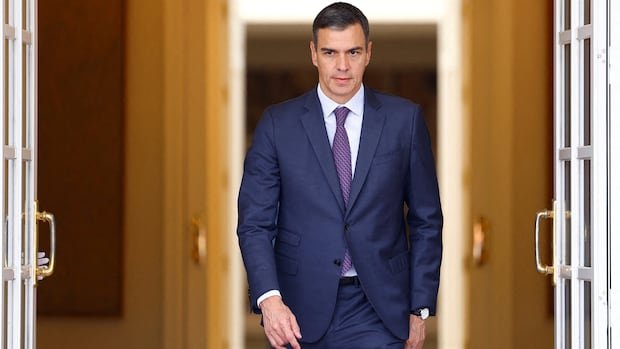

Spanish Prime Minister Pedro Sánchez has announced an early election scheduled for November 29 to seek additional parliamentary support following the rejection of housing crisis proposals last week. This snap election poses a significant risk for Sánchez as his Socialist Party lags behind in most polls, potentially leading to the downfall of one of the few remaining left-leaning governments in Europe amid a surge in far-right influence.
The decision to call for an early election aligns with broader challenges facing Europe, including pressure from U.S. President Donald Trump on defense spending, competition from cheap Chinese imports, rising borrowing costs, disillusioned youth, and a notable increase in far-right support. Despite these obstacles, Sánchez, known for his political acumen, has a history of defying expectations. The upcoming election could provide an opportunity for him to leverage public discontent over unaffordable housing in Spain.
Sánchez emphasized the need to rally a stronger progressive majority in parliament to overcome vested interests, drive social progress, and continue the country’s transformation. While the announcement had a neutral impact on Spain’s stock market and government bonds, opposition leader Alberto Nuñez Feijoo of the People’s Party pledged to boost homebuilding and reduce taxes if elected, critiquing the current government’s handling of the housing crisis.
Internationally, Sánchez has gained recognition for his progressive stances on various global issues, despite facing domestic challenges. Recent housing protests have injected momentum into his campaign, with rejected proposals finding support among demonstrators. Notably, Spain’s largest unions have called for a nationwide strike to demand better wages to address housing affordability, following the parliament’s dismissal of Sánchez’s housing decrees.
Opinion polls suggest a potential coalition led by the People’s Party, with support from the anti-immigration Vox party, could secure a majority in the lower house, potentially bringing a far-right party into the central government for the first time since the end of Francisco Franco’s dictatorship. Sánchez, who has governed through fragile coalitions, faces growing fragmentation among his allies, hindering legislative progress despite Spain’s strong economic performance.
To push through the rejected housing decrees, Sánchez plans to utilize a rare legislative mechanism before the election through a limited chamber composition. This move aims to address the urgent housing crisis and navigate the political landscape amid increasing uncertainty. The election outcome remains unpredictable, with various parties vying for power in a deeply divided political landscape.
As Sánchez navigates the challenges ahead, his housing initiatives serve as a pivotal platform to position himself as a leader of the mobilized left, diverting attention from other contentious issues like the Ceuta migrant crisis and corruption scandals. By seizing this window of opportunity, Sánchez aims to maintain his political relevance and shape the narrative leading up to the upcoming election.