

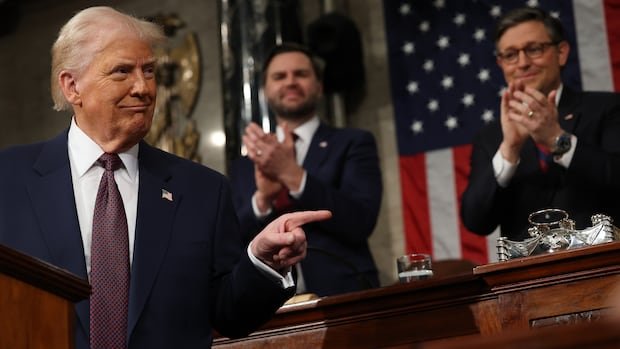

Republicans are gearing up for the upcoming U.S. midterm elections in November, under increasing pressure to uphold their majority in the House, while Democrats are making strides in pivotal races. The implications go beyond Congressional power balance. If Democrats manage to secure both the House and Senate, they would gain leverage to scrutinize the Trump administration, challenge its policies, and influence legislative progress.
However, a shift in Congress does not automatically limit the president’s authority to act. Journalists Katie Simpson, Willy Lowry, and Paul Hunter analyze the potential impact of a party turnover in Congress and the Senate on Trump’s authority and its implications for Canada-U.S. trade relations.
Regarding the significance of Democratic control in Congress, a listener raised a question about the extent to which it would matter if Trump continues to make policy decisions primarily through executive orders rather than legislation. The discussion touches on the typical approach presidents take to introduce policy changes, highlighting Trump’s distinctive method of utilizing executive orders to push through his agenda in the absence of full congressional cooperation.
Despite the potential shift in power, Trump’s ability to enact policies through executive orders remains intact, demonstrated by his actions such as engaging in military conflicts, imposing tariffs, and challenging citizenship laws. The discussion also raises questions about potential obstacles, investigations, and the likelihood of impeachment, emphasizing that while there may be political hurdles and optics, Trump’s ability to pursue his agenda through executive actions is unlikely to be significantly hindered.
The dialogue underscores the diminishing role of Congress in recent years, with its oversight function being largely overshadowed by other factors, leaving the court system as the primary check on the president’s authority. Even if control shifts to the Democrats in Congress, Trump’s resolve to advance his agenda through executive actions and vetoes remains steadfast, indicating his intention to persist in implementing his policies despite potential opposition from the legislative branch.