

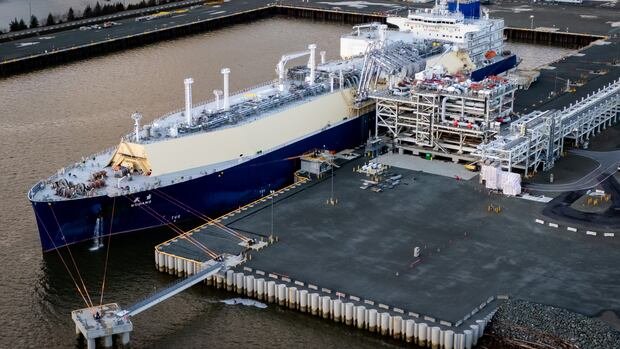

LNG Canada has decided to utilize Chinese steel once again for its $33-billion Phase 2 expansion project in Kitimat, British Columbia, citing the need for specialized fabrication capabilities. This decision aligns with the consortium’s previous collaboration with China Offshore Oil Engineering Co., Ltd. (COOEC) for the production of its existing liquified natural gas processing units.
The recent announcement of the Phase 2 expansion involves the addition of two more processing units, bringing the total to four, and doubling the annual production capacity from 14 to 28 megatonnes by the early 2030s. While questions were raised about the use of Canadian versus Chinese steel during the final investment decision event, Prime Minister Mark Carney emphasized that the choice ultimately lies with the project proponents.
In response to inquiries about steel sourcing for the expansion, LNG Canada explained that the challenge lies in the specialized fabrication requirements for the project’s modules, which necessitate capabilities not readily available in Canada. With only a handful of fabrication yards globally possessing the necessary infrastructure for such large-scale projects, COOEC in China was highlighted as a suitable partner due to its past success with LNG Canada’s Phase 1.
Although Chinese steel is being utilized for certain components, a spokesperson for Finance Minister François-Philippe Champagne emphasized that the overall project will still benefit Canadian suppliers in various capacities. The consortium’s structure includes Shell Canada Energy as the majority operator, with PetroChina, Petronas, Mitsubishi Corporation, and Korea Gas Corporation as key shareholders.
Furthermore, while certain aspects of the expansion may involve Canadian steel, such as the compressor stations along the pipeline network, the use of Chinese steel for specific modules has been justified by logistical considerations. The decision has sparked debates within the Canadian steel industry, with some stakeholders asserting that domestic fabricators have the capability to meet the project’s requirements.
In light of concerns about the impact on the Canadian steel sector, it is noted that the project’s complexity and scale necessitate a strategic approach to sourcing materials. Despite the preference for Canadian suppliers, the unique challenges posed by the project’s requirements have led to the continued partnership with COOEC for the specialized fabrication needs.
Overall, the decision to employ Chinese steel for the LNG Canada Phase 2 expansion reflects a balance between project requirements, logistical considerations, and global sourcing capabilities. While the utilization of Canadian steel remains a priority where feasible, the specialized nature of certain project components has led to the selection of international partners to meet specific fabrication needs.