

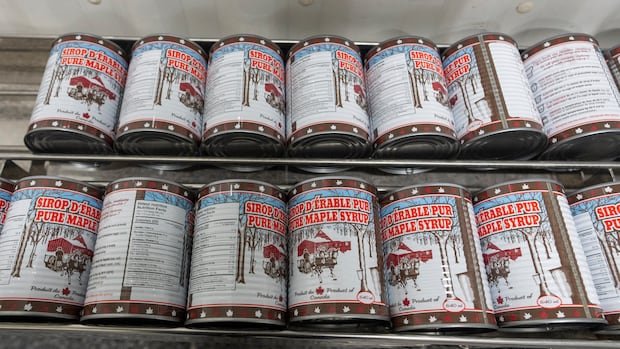

The president of the Quebec maple syrup producers’ association has announced that the province’s strategic syrup reserve has been fully utilized due to the high demand for the product. Luc Goulet, the president of Quebec Maple Syrup Producers, emphasized the necessity of government assistance to ensure the industry’s continued growth.
Maple syrup production is heavily influenced by weather conditions, prompting the producers’ association to establish a strategic reserve to maintain stable prices and supply. Last year, U.S. commercial customers stockpiled syrup in anticipation of potential tariffs imposed by then-U.S. President Donald Trump.
Goulet disclosed that the strategic reserve has been depleted as sales continue to surge. During the unveiling of a report on the industry’s economic impact, Goulet stated, “Our strategic reserve has been reduced to zero,” cautioning that unfavorable weather conditions might lead to a loss of customers, citing past instances in 2007 and 2008 when stock shortages resulted in market setbacks.
Louis Turenne, the president of the Maple Industry Council, highlighted the increasing market share of Quebec maple syrup overseas. Export figures showed a 9.34% rise in 2024 and a further 15.8% surge in 2025 amid tariff concerns. However, export growth slowed to 2.48% in 2026 compared to the previous year’s January-August period.
Goulet acknowledged the challenge of meeting consumer demand but stressed the untapped potential for industry expansion in Quebec’s maple groves. He expressed dissatisfaction with the current level of investments from Quebec City and called for increased government support. Turenne suggested that Quebec could boost production by providing financial aid to producers and assisting processors in exploring new international markets.
The maple syrup industry, primarily concentrated in Quebec, contributes significantly to the region’s economy. The sector’s economic impact, including production, processing, and equipment manufacturing, totaled $1.21 billion in GDP in 2025 and employed over 10,000 full-time workers. The industry also generated $285 million in tax revenue, excluding municipal taxes and public land lease fees.
Turenne emphasized the need to diversify markets beyond the U.S., aiming to reduce reliance on a single market. Despite the industry’s importance, especially in Quebec, some candidates in the recent election campaign were surprised by its significant role as an employer and economic driver. Goulet underscored the industry’s importance, noting that in certain municipalities, maple syrup production is vital for sustaining local communities.