

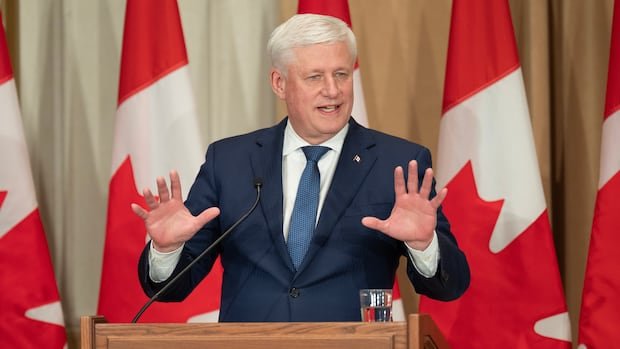

Former Canadian Prime Minister Stephen Harper expressed his concerns about the idea of Alberta separating from Canada in an article published on Friday. Harper emphasized that voting for separation, even if just to convey a message, would be a risky and challenging endeavor. He highlighted the absence of credible leadership required to establish a new nation.
The upcoming referendum on October 19 will ask voters whether Alberta should continue as a province within Canada or if the government of Alberta should organize a second referendum for separation. Harper, during the unveiling of his official prime ministerial portrait earlier this year, called for unity between Liberals and Conservatives amid growing separatist movements in Alberta and Quebec.
In a recent event, Harper supported the federal government’s decision to halt trade talks with the United States, advocating for reduced reliance on the U.S. to safeguard Canada’s sovereignty. Conservative Leader Pierre Poilievre also voiced his support for a united Canada, attributing discontent within Alberta to the Liberal government’s actions but discouraging separation as a solution.
Harper stressed in his column that pursuing independence poses significant risks, urging Canada to promptly address self-imposed barriers for long-term stability and prosperity. Despite separatist leaders’ efforts to sway opinions, polls consistently show a majority of Albertans prefer to remain part of Canada.
Pro-independence advocates argue that voting for separation would enhance Alberta’s bargaining power with Ottawa. However, Harper disagreed, cautioning against using separation as a mere message-sending tool, citing Quebec’s historical separatist debates. He emphasized the need for focused efforts to address grievances within the current framework.
Cory Morgan, representing Pathway to Independence, acknowledged Harper’s federalist stance but noted recent developments, such as discussions around the West Coast oil pipeline, as already influencing government attention. Harper credited his government with quelling separatist sentiments, including in energy policy, while Poilievre claimed that separatism was eliminated under Harper, drawing criticism from the Bloc Québécois.
Harper’s spokesperson declined to provide further comments on the matter.