

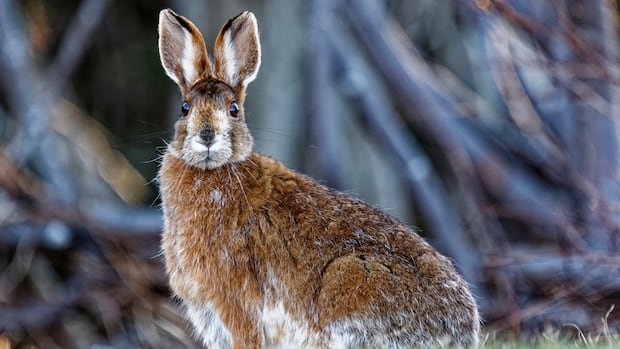

Snowshoe hares have become more noticeable on Prince Edward Island following post-tropical storm Fiona, according to a wildlife biologist from the province. Garry Gregory from P.E.I.’s fish and wildlife division mentioned an increase in observations of what many Islanders mistake for “rabbits” in their surroundings. However, these animals are, in fact, snowshoe hares and not rabbits, which are non-native to the region.
While there is no formal data tracking the rise in snowshoe hare numbers, Gregory suggested that changes in the landscape post-Fiona make it plausible to assume an increase in their population. The storm left behind dense debris in forests and woodlots across P.E.I., providing ideal escape cover for snowshoe hares. The tangled brush piles and downed trees have created conditions where predators find it challenging to access the hares, potentially contributing to a spike in their population.
The aftermath of Fiona has also led to new growth in the forest, benefiting snowshoe hares as it offers them winter food sources like willows, grey birch, maples, and pin cherry. This growth also supports other wildlife species such as songbirds and woodcock. However, the advantages hares gained post-storm may diminish over time as the debris breaks down and tree cover changes.
Gregory emphasized that encountering hares in yards is usually not a concern, except for minor instances of garden nibbling. Feeding hares is unnecessary and could lead to unintended consequences, such as bringing them closer to potential predators like dogs. Additionally, while reports of hares with ticks have increased, the tick species found on hares are not the primary concern for Lyme disease and generally pose no significant health threat unless the infestation is severe.