

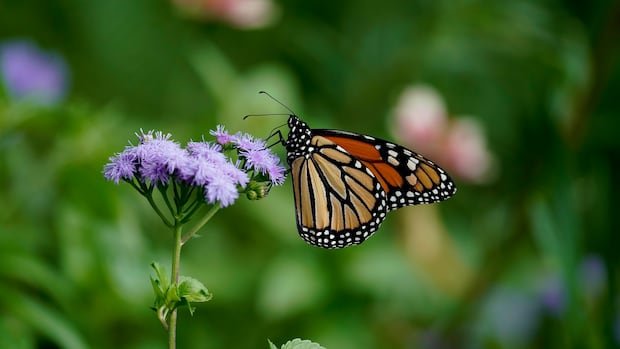

MaryAnn Lepp is amazed by the abundance of monarch butterflies undergoing their remarkable transformation in her garden. She observed 20 caterpillars feasting on her swamp milkweed in just one day this week. This surge in monarch activity is being witnessed by numerous Canadian monarch enthusiasts, with backyard milkweed patches thriving due to the wet and hot conditions in parts of the Prairie this summer.
“This is chrysalis No. 2 … I’m so thrilled,” Lepp exclaimed as she searched for monarch cocoons in her garden in La Broquerie, approximately 60 kilometers southeast of Winnipeg. She noted that there have been more butterflies this year compared to previous years.
While conservation experts cannot definitively attribute the increase to favorable weather, they acknowledge the surge of anecdotal reports of caterpillars, chrysalises, and monarch butterflies as a positive sign for the federally endangered species. Marika Olynyk, curator of the Living Prairie Museum, reported a significant presence of monarchs in Winnipeg throughout the summer.
The preservation of native plants, including various milkweed species, at the tall grass prairie preserve in Winnipeg has contributed to the flourishing population of pollinators such as monarch butterflies. Despite efforts by individuals like Lepp to plant milkweed and native wildflowers, these essential plants are not as abundant or widespread as they were historically due to habitat loss caused by the conversion of native grasslands into farmland.
Monarchs play a crucial role as indicators of species and habitat loss, with the tallgrass prairie that once covered vast areas of North America now largely disappeared. The monarch butterfly was officially listed as endangered in 2016 due to habitat destruction, prompting calls for increased protection measures.
To estimate the monarch population, researchers rely on monitoring the acres of trees covered with monarchs at their wintering grounds in Mexico. While awareness and conservation efforts have increased, the monarch population remains at only 50% of sustainable levels. Olynyk emphasized the ongoing need for conservation actions to preserve the species.
In addition to monarchs, the Assiniboine Park Zoo in Winnipeg has observed a rise in the population of the critically endangered Poweshiek skipperling butterfly. The zoo’s conservation programs manager, Laura Burns, highlighted the challenges facing this species and the efforts being made to prevent its extinction. The zoo breeds and releases Poweshiek skipperlings in an attempt to bolster their population and promote recovery.
Overall, the favorable weather conditions this year have had a positive impact not only on monarchs but also on other butterfly species. Conservation efforts, such as tracking monarch migration with radio transmitters, are underway to protect these vital pollinators. Enthusiasts like Lepp are dedicated to ensuring that caterpillars and chrysalises have the opportunity to develop and thrive, emphasizing the importance of conservation and community engagement with nature.