

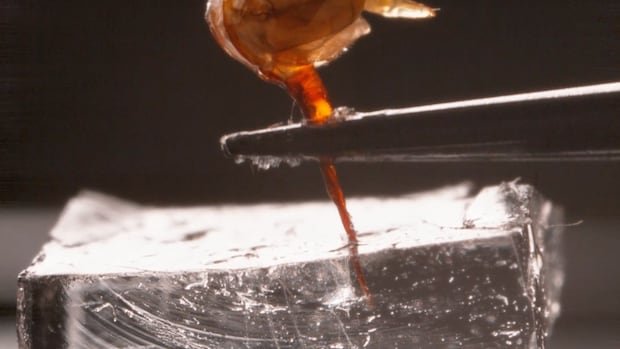

Recent research published in the Proceedings of the National Academy of Sciences has brought new insights into the effectiveness of the stinger of a western honey bee (Apis mellifera), a defensive weapon that often results in the bee’s death after delivering venom. Fiorella Ramirez Esquivel, a postdoctoral researcher at Macquarie University in Australia and the lead author of the study, highlighted the significance of being able to capture the bee stinger in action using modern high-speed cameras.
The study used advanced cameras capable of capturing hundreds of frames per second to observe the rapid movement of bee stingers. By removing the stingers from live honey bees and quickly analyzing them, the researchers were able to uncover the intricate mechanisms at play. The experiments revealed a unique “double-piston design” in the stinger, where specialized valves work simultaneously to drive the stinger deeper into the target while pumping venom from the sac.
Juliana Rangel, a professor of apiculture at Texas A&M University, emphasized the complexity and efficiency of the bee stinger’s mechanism, highlighting the continuous pumping of venom even after the sting. The study also explored the social nature of honey bees and how their defense mechanism, including autotomy, serves to protect the larger colony. Rangel noted that the stinger’s barbs and continuous penetration enhance the bee’s ability to ward off threats.
The research sheds light on the intricate design of the honey bee stinger, providing valuable insights that could have potential medical applications. Lauren Ponisio, an associate professor at the University of Oregon, expressed interest in studying other bee species that produce honey but lack stingers, raising questions about the evolutionary adaptations of different bee species.