

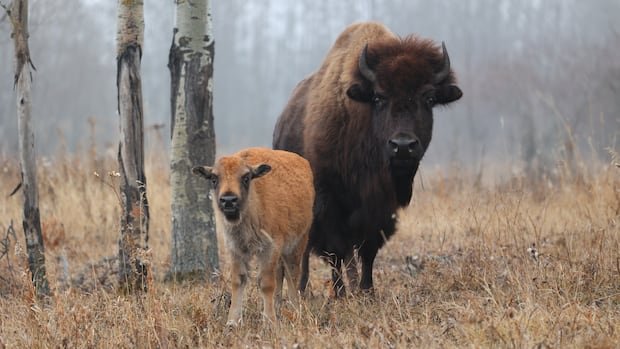

In the past, bison roamed North America abundantly in massive herds with rust and auburn fur, but they were nearly wiped out due to hunting.
Recent DNA research has uncovered insights into the decline and gradual return of bison herds to their once dominant territories, shedding light on the significant changes the species has undergone.
The study, detailed in the journal Science, involved sequencing 160 bison genomes over a span of 20,000 years, with contributions from about 40 scientists, many of whom were Canadian researchers. Led by paleogeneticist Jonas Oppenheimer, the study was conducted at the Paleogenomics Lab at the University of California, Santa Cruz, renowned for its expertise in analyzing ancient DNA from fossilized remains.
The ultimate goal of this research is to support current conservation initiatives by leveraging the intricate genetic history of bison to enhance their survival prospects in the future.
While bison were once genetically cohesive, they are now segregated into distinct, managed populations. The fragmentation of present-day herds poses challenges to their resilience, according to Oppenheimer in an interview with CBC News.
Sequencing the bison genomes provided a comprehensive view of how the species’ biological diversity has evolved over time by examining ancient bison remains and samples from existing herds.
Researchers collected DNA samples from managed bison herds in Canada and the United States, including those in Elk Island National Park, Wood Buffalo National Park, Ronald Lake, and Wabasca. Ancient DNA was sourced from various collections in the US, Canada, and Russia, such as those at Parks Canada and the Royal Alberta Museum.
The study encompassed 115 ancient bison genomes and 45 modern ones, combined with previously sequenced data, creating the most extensive genetic map of the species to date. Chris Jass, the curator of quaternary paleontology at the Royal Alberta Museum, hailed the study as a remarkable collaboration that showcases the value of ancient fossils in modern conservation practices.
The research highlighted how the bison population’s structure, diversity, and genetics were impacted by historical declines, particularly due to human-induced factors.
The slaughter
Before European colonization, bison freely roamed the continent for millennia, maintaining genetic uniformity. However, in the late 19th century, intensive hunting and governmental actions led to a drastic decline in bison numbers.