

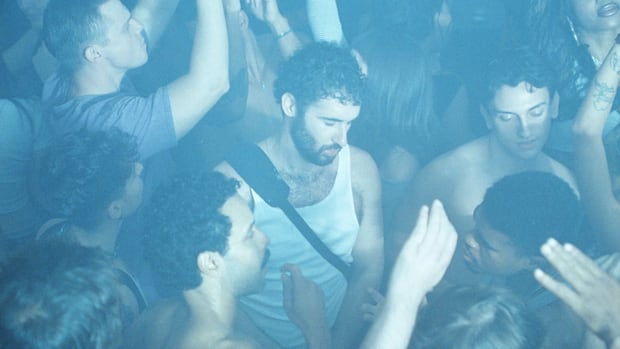

Club Kid centers on Peter, portrayed by writer/director/actor Jordan Firstman, who navigates the drug-fueled haze of a life unfulfilled as a “Club Kid.” He embodies a young man enjoying the carefree aspects of single life yet lacking the solid foundation that comes with taking responsibility.
A completely unanchored, profoundly unhappy thirty-something, Peter resides in the spacious, rent-controlled loft of his deceased mother in New York City. He is a directionless man-child who appears at meetings for his party promotion business still under the influence, then searches for reasons to care about being terminated from his job.
Club Kid also features Arlo (Reggie Absolom), a young boy with broccoli-like hair who unexpectedly arrives at Peter’s door a decade after a regretful, half-conscious encounter Peter had with a British woman during one of his parties. The wide-eyed, incredibly vulnerable preteen is brought there following his mother’s unexpected passing — delivered by a friend of Arlo’s mother, insisting there are no other relatives able to take him in.
She then promptly leaves — ignoring Peter’s loud, bewildered objections.
Peter’s objections include: he was unaware he had a child, he isn’t prepared to care for one, is the child even legally in the country? And most importantly: isn’t it both unfair and frightening to have his future consumed and disrupted by the constant demands of a needy little infant?
That last point may have been more subconscious. However, these themes are intricately woven into Firstman’s debut feature: an intensely emotional yet astonishingly authentic mark of a genuine talent’s emergence. A profoundly moving melodrama that feels charming and comfortably predictable until it takes unexpected turns, Club Kid is undoubtedly a significant work.
It stands out as one of the finest films showcased at this year’s Toronto International Film Festival. And while there may be some uncertainty, Club Kid may very well draw tears.
Nevertheless, it’s not as if this film is entirely original. Expand the premise, and you’ll find a narrative arc so familiar that you may recognize all the elements already.
For instance: a sorrowful, disenchanted adult lacking direction suddenly finds themselves obliged to care for a child, who possesses a sadness that either matches or surpasses their own. This sets the stage for showcasing the trials and responsibilities of caregiving — a chaotic and humorous series of mishaps in domestic tasks; frantic yet childish attempts to ensure the child’s survival.
In Club Kid, expect visuals like: pizza for dinner — followed by a rush to the bathroom. A closet filled with explicitly graphic T-shirts that the naive child is blissfully unaware he shouldn’t be wearing. Additionally, a range of other humorous mishaps gradually tipping the balance from resentment to the epiphany that there is no greater purpose than dutifully attending to that iPad-obsessed burden draped over your shoulder.
-
REVIEW
The Plague isn’t a new Lord of the Flies. It’s more terrifying
-
REVIEW
The Debut is totally going to win an Oscar
If you’ve watched films, you’re likely familiar with this storyline: the Big Daddys, About a Boys, Ups, Brother Bears, Uptown Girls, and even the Fagins and Artful Dodgers from Oliver!, singing about personal transformations and new beginnings to the tune of Reviewing the Situation.
And if you’ve seen these films, you probably recognize the themes they explore: the metaphoric or literal self-sacrifices. The martyrdom that arises when an adult relinquishes their independent lifestyle — or life in its entirety — to grow up and safeguard the broader future that this child symbolizes.
In the case of Club Kid, you need not worry — none of these points are spoilers, even though they belong to a genre I’ve playfully dubbed “sad men stealing sad kids.” This is because, despite the initial setup and a superficial alignment with a melodramatic framework that has existed since 1921’s The Kid and 1861’s Silas Marner, Firstman’s greatest asset lies in his understanding and subversion of the genre.
Just as you begin to embrace the genuinely well-crafted and effective tropes — with Auntie Mame being a primary cinematic influence, as Firstman mentioned to CBC at a TIFF press conference — they are cleverly turned on their head. An initially smooth yet suspicious meeting between the two characters evolves, seemingly almost by chance, into something deeper and more complex.
Within a few days, Peter, the new father, is already delivering monologues about how straightforward it is to care for Arlo; asserting that parenting is quite simple as long as he provides pasta for dinner and reads a few bedtime stories. He even goes as far as to directly tell innocent young Arlo — and, by extension, us — during one of those nighttime tales that caring for him has miraculously resolved his long-standing issues of self-loathing and low self-esteem. All this in less than a week.
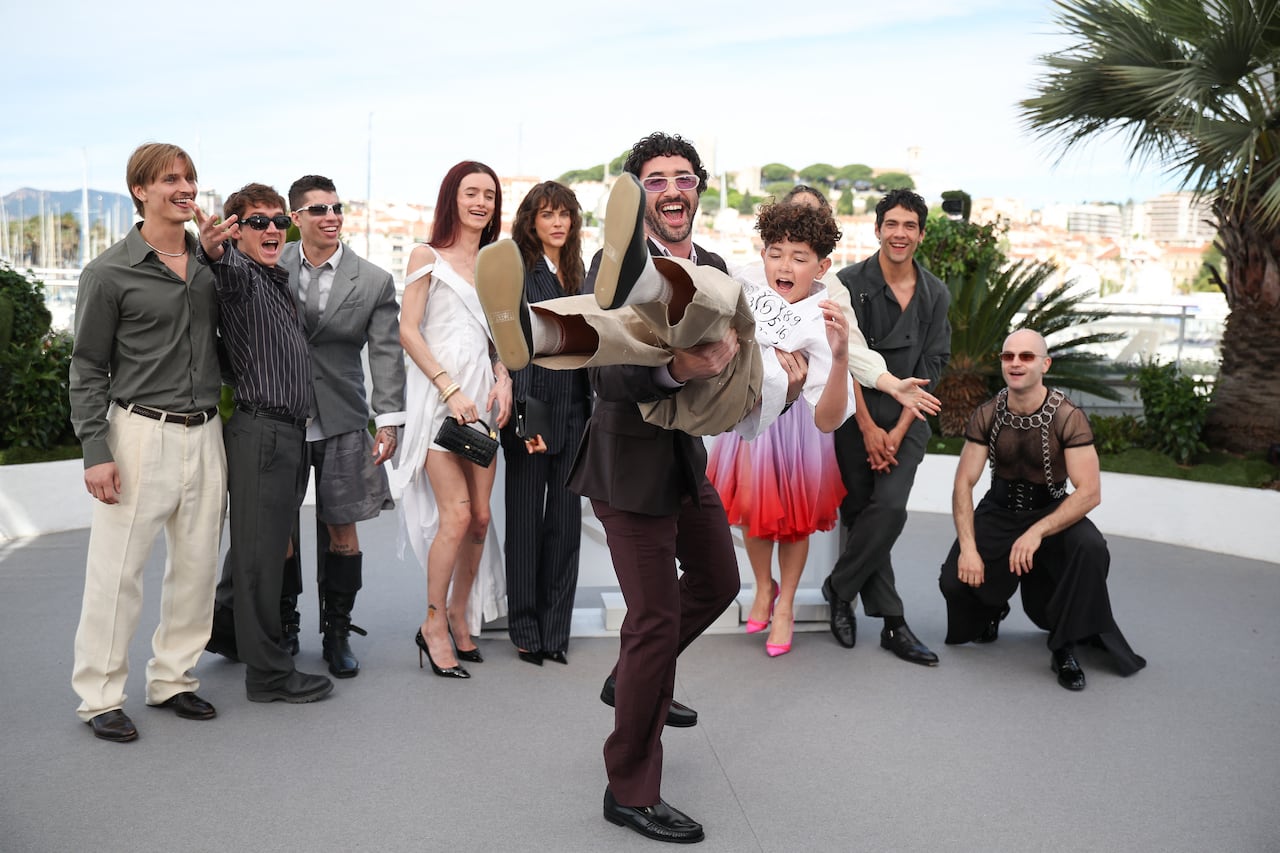
Firstman holds British actor Reggie Absolom, who plays Arlo, at the Cannes Film Festival in Cannes, France on May 15, 2026. (Valery Hache/AFP/Getty Images)
Meanwhile, Arlo is portrayed as precociously wise, open to everyone, and with a well-developed taste in music that includes Elliott Smith and the Cocteau Twins. Remarkably, he appears to bear no residual trauma from his mother — who presumably died by suicide just weeks prior, in a context that soon reveals even deeper terrors.
Instead, Arlo effortlessly refers to Peter as “dad” without any prompting — this wholesome demeanor advancing in a manner that might imply Club Kid is merely racing through the well-trodden, albeit numbly cliché, formula of these melodramas.
However, a shocking and inexplicable incident in a public park shifts all those assumptions. It is a deliberately ambiguous moment, followed by a series of unexpected developments that challenge Peter’s true capability as a parent, while keeping Arlo’s inner thoughts shrouded in mystery. These developments imply that the boy is deeply scarred and disturbed by past trauma — while maintaining a distance from the audience.
This trauma illustrates that Peter has not — and cannot — grasp the profound complexities of a child’s mind through mere paternal displays of affection.
“I think it was intentional for me, for it to seem like it was easy,” Firstman said during the press conference regarding his choice to play with and then overturn the conventions of these films.
“Peter is still so immature that he believes love is sufficient … but that’s not how adult life operates. You must handle the tedious paperwork, too.”
Beyond the hilarious comedy, sincere performances, and authentically vibrant New York party milieu, this is Club Kid‘s most significant achievement. A narrative that acknowledges the essence of its genre: a man discovering personal freedom by finally relinquishing an immature grasp on autonomy. Yet it does so without reducing the transformative process to a child-shaped, broccoli-haired prop.
In Club Kid, Arlo is a genuine child. His name is Arlo, and he just might bring you to tears.