

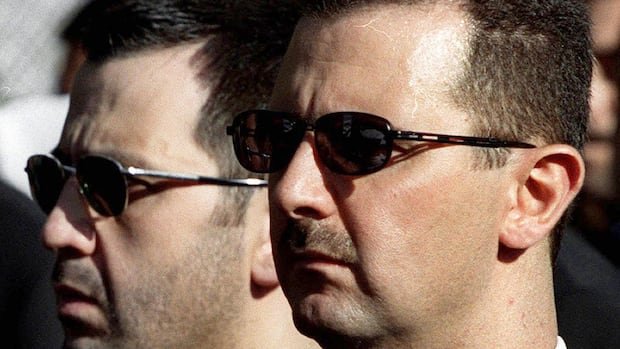

A Syrian court has handed down a death sentence in absentia to former Syrian President Bashar Assad and his younger brother for their roles in committing crimes against humanity and war crimes during Syria’s 14-year conflict, resulting in approximately half a million deaths.
This verdict, delivered at the Fourth Criminal Court in Damascus, marks the first time that Assad or any members of his inner circle have been sentenced since their decades-long rule came to an end 20 months ago. Judge Fakhareddine al-Aryan, speaking during a live broadcast on state TV, stated that Bashar Assad utilized state agencies to perpetrate war crimes and crimes against humanity.
Also condemned to death in the same trial was Assad’s maternal cousin, Atef Najib, who was found guilty of overseeing a violent crackdown in the southern province of Daraa, which sparked the uprising and subsequent civil war.
Amid heightened security measures, Najib, who had been sanctioned by the U.S. Treasury Department in April 2011, appeared in court wearing a prisoner’s uniform as the sentence was read. He served as a former brigadier general in the Syrian army and headed the political security branch in Daraa province under Assad’s regime in 2011.
Najib’s tenure was marred by the arrest and torture of more than a dozen teenagers who protested against the government in Daraa, triggering widespread demonstrations against Assad’s oppressive security policies. These protests eventually led to a 14-year civil war that culminated in Assad’s ousting in a swift rebel offensive.
Numerous victims of Najib’s actions were present at the courthouse, including individuals who were teenagers at the time of the crackdown. Expressing relief at the sentencing, they emphasized the importance of justice being served for those who lost their lives during the violence.
The sentencing of Najib and the calls for accountability for crimes committed during the Assad era have been met with mixed reactions. Human Rights Watch has voiced opposition to the death penalty in all cases, stressing the need for fair trial standards to be upheld, including the right to appeal.
As the legal proceedings continue, the pursuit of justice and accountability for the atrocities committed during the Syrian conflict remains a critical aspect of the country’s transition towards a more just and stable future.