


According to Chief Dalton Silver, residents of Sumas First Nation, located near Abbotsford, B.C., have become accustomed to oil spills.
For many years, crude oil has been transported, stored, and managed across the traditional lands of the First Nation. Silver opposed the Trans Mountain Expansion Project in 2024 but was unsuccessful.
Currently, he is preparing for another battle: this time against the proposed Pacific Link pipeline, which is expected to follow a similar path as the Trans Mountain pipeline.
“It will undoubtedly cross our territory, and that is quite concerning for many in our community,” he stated.
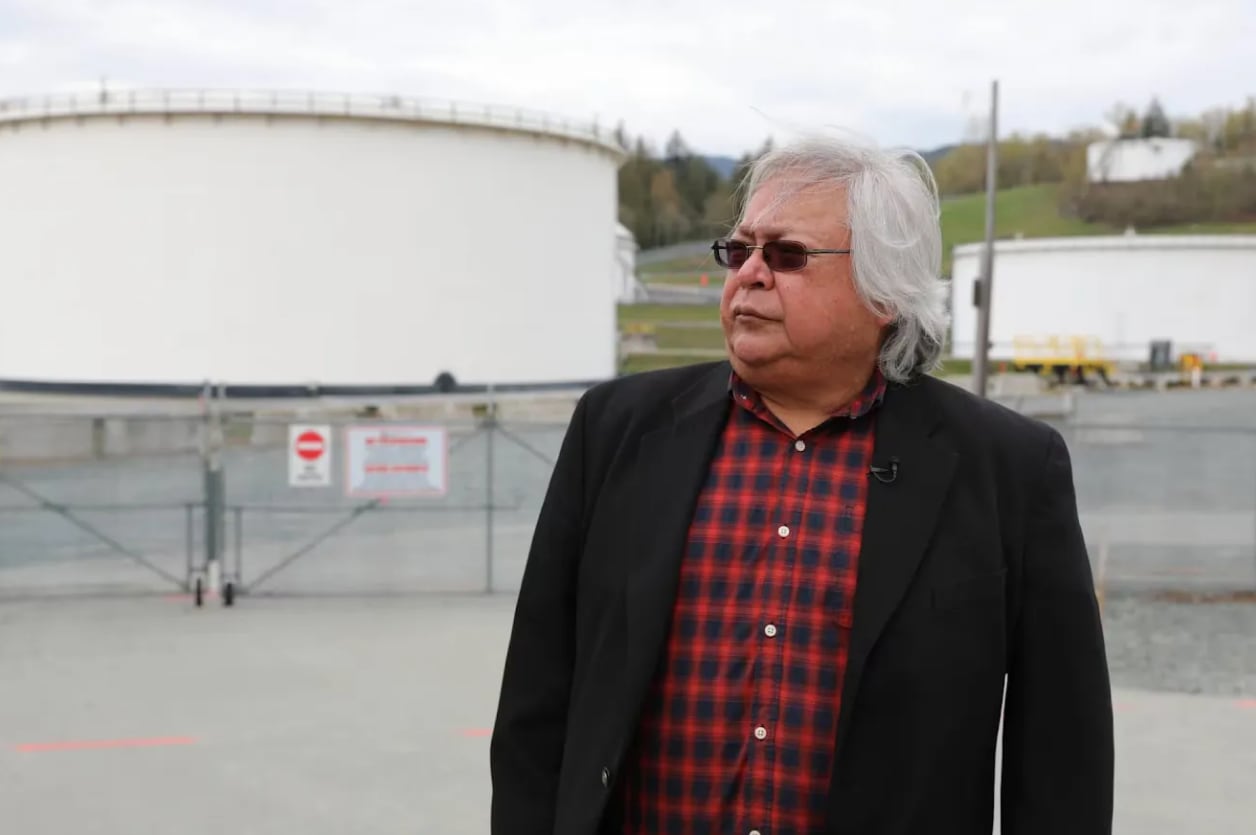
Chief Dalton Silver in front of the Trans Mountain facility on Sumas First Nation’s traditional lands. He is contemplating legal action against the proposed Pacific Link pipeline. (Josh McLean/CBC)
For many years, Silver has expressed concerns about the potential impact of oil spills on the community’s drinking water. Now, he fears that the Pacific Link project could exacerbate these issues.
“I am against this project. Particularly due to how the process has unfolded, it has not been inclusive at all,” he remarked. “The risks it poses to our land, fish, and wildlife are significant.”
Silver is not alone; numerous Indigenous leaders have voiced their worries regarding the Carney government’s plans for the pipeline. In various interviews, leaders from communities along the proposed path expressed their doubts and concerns, while some showed interest in the project’s development.
Some leaders feel excluded from the conversation, despite the project likely impacting their communities.
Silver is contemplating a legal challenge, and other Indigenous leaders in British Columbia are considering similar actions. He mentioned that some are even discussing direct interventions, such as blockades.
Numerous concerns, tight deadlines
The Pacific Link pipeline aims to transport one million barrels of oil daily from Bruderheim, Alberta, to Roberts Bank, B.C. Prime Minister Mark Carney has declared this project to be in the national interest, emphasizing the need for a swift construction timeline.
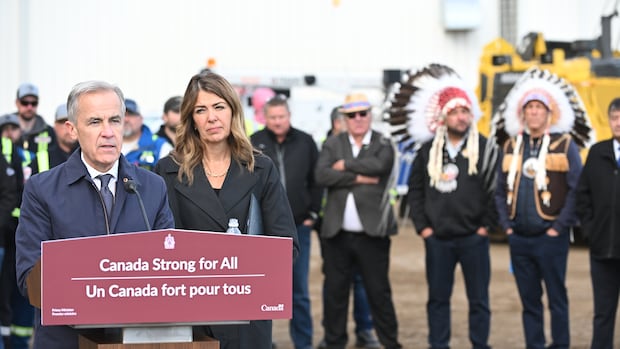
During last week’s announcement in Fort McMurray, Carney expressed his desire to commence construction within a year, aiming to contribute billions to Canada’s GDP once the pipeline is operational.
Simultaneously, Carney has stressed the importance of responsible construction, pledging to consider environmental issues and Indigenous rights, while setting a target to finalize terms by September 2027.
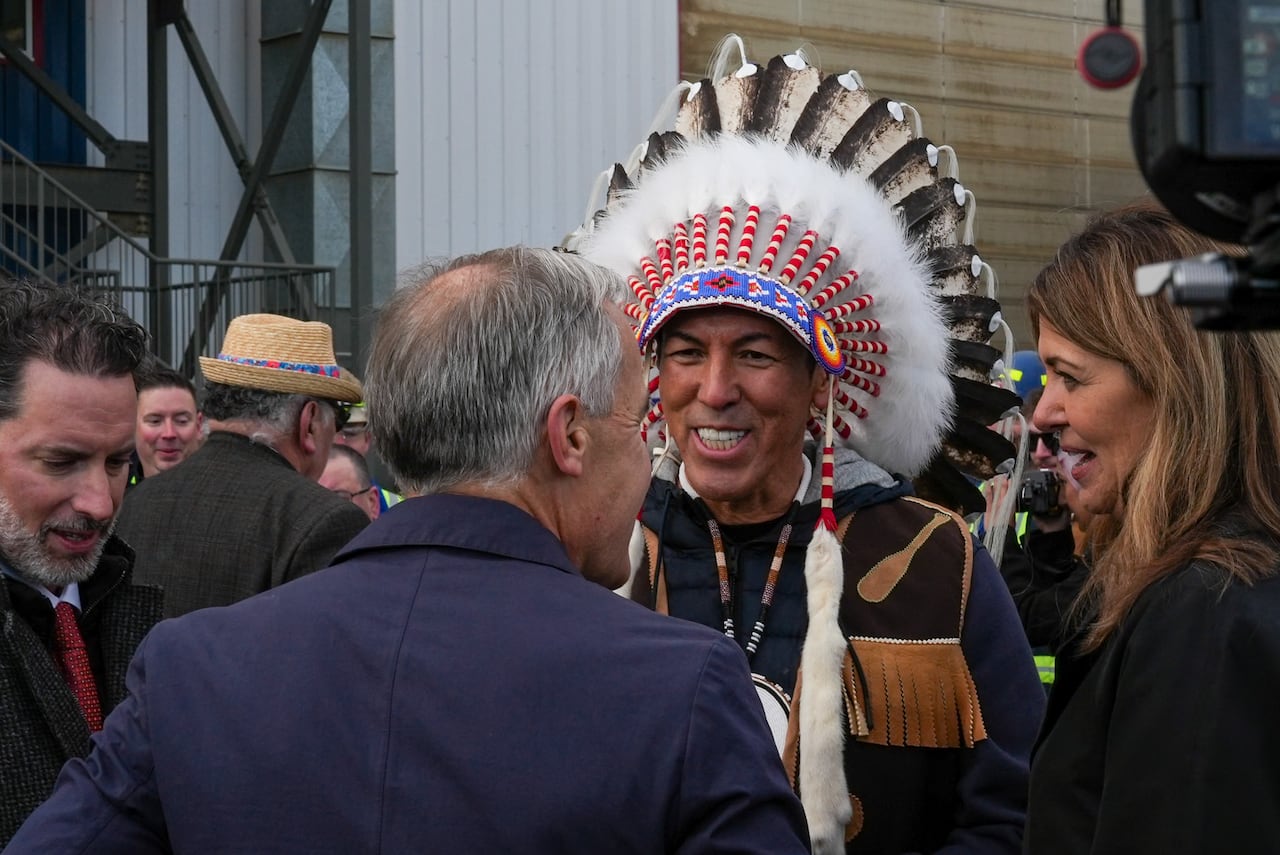
Chief Raymond Powder from the Fort McKay First Nation converses with Carney following the ceremony that announced steps to expedite the West Coast pipeline project. (Vincent McDermott/CBC)
Chief Raymond Powder of the Fort McKay First Nation is keen to take advantage of this economic opportunity. However, he believes Carney’s timeline is excessively rushed.
“I am aware that the Liberal party campaigned with a focus on strengthening the economy,” said Powder, who was present at the Fort McMurray ceremony.
“I would appreciate having a bit more time for thorough assessment.”
While Powder is enthusiastic about the pipeline’s development, he insists on the necessity for First Nations to have a significant role in discussions, enabling them to address concerns about the potential environmental impacts that could affect not only their generation but also future ones.
“Our connection to the land is profoundly important,” he noted.
Worries about toxic waste
One significant issue is the tailings produced by oilsands operations: the toxic byproducts from mining and extraction that can contaminate land and water.
“How Canada manages these tailings remains uncertain, and the concerns are substantial,” remarked Treaty 8 Grand Chief Trevor Mercredi.
Mercredi attended Carney’s announcement but made it clear that his presence does not equate to approval.
“Being invited to the announcement does not mean endorsement of the project,” he asserted. “There is no agreement or consent. Numerous details still need to be clarified.”
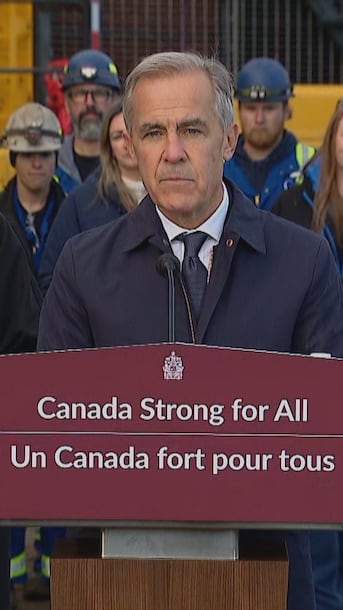
A proposed West Coast pipeline has been designated as the first project of national interest, as announced by the federal and Alberta governments. The Pacific Link pipeline aims to transport up to one million barrels of oil daily — a venture Prime Minister Mark Carney claims will ‘transform’ Canada’s economy. The pipeline is expected to be operational by 2032.
In a statement, a representative for Environment Minister Julie Dabrusin indicated that her department collaborates with Indigenous partners, provincial and territorial governments, industry, and other stakeholders to safeguard public health, Indigenous rights, and the environment.
Environment and Climate Change Canada continues to explore options for managing water used in oilsands tailings ponds, and the Fisheries Act prohibits individuals and companies from releasing substances that compromise water quality to the detriment of fish or their habitats, according to the spokesperson.
Who is included in the dialogue?
Mercredi is pondering who is being included in the discussions and who is being excluded.
<p“It is causing division within our communities. Only select communities are being provided equity,” he noted.
When introducing the Pacific Link, Carney stated that Indigenous communities would collectively receive at least 10 percent ownership.
In response to Mercredi’s concerns, the Privy Council Office (PCO) stated that Canada’s Major Projects Office, which is responsible for guiding projects like Pacific Link through the approval process, held over 140 meetings with Indigenous organizations.
“The consultation list was based on a preliminary traditional territory analysis created by the Canada Energy Regulator, consultation records from the Trans Mountain Expansion Project, geographic proximity to the proposed route and marine terminal, Canadian treaties, modern treaty considerations, and information from federal and provincial sources,” explained a PCO spokesperson.
Some communities have been engaging with the oil industry for decades, which places them in a better position to negotiate compared to others. Mercredi is determined to ensure that all nations benefit fairly.
For many communities, Silver explains, the economic prospects are simply too appealing to disregard—even if they hold significant concerns about the environmental consequences.
“There is a lack of resources and few opportunities, so yes, if money is on the table… for some, the need is very real,” Silver remarked.
He pointed out that many communities urgently require funding for their schools and water systems.
-
Carney, Smith say new West Coast pipeline could get oil companies building again
-
West Coast oil pipeline becomes 1st project designated in national interest
“You’re in a difficult spot whether you proceed or not,” he commented.
Robert Phillips, a political executive with the First Nations Summit in British Columbia, is willing to give Carney the benefit of the doubt.
“He has assured us that we will receive consent and that meaningful consultation will occur. Therefore, I can only take him at his word,” he expressed.
“The proof will be in the outcomes.”