

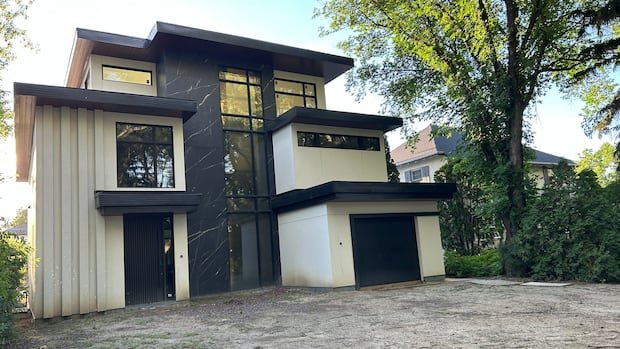

The Saskatoon development appeals board has upheld regulations regarding a house in the city’s Nutana neighborhood that exceeds height limits. The board’s decision, issued recently, emphasized that relaxing standards for the house would go against the zoning bylaw’s purpose. The three-story residence on University Drive, valued at $1.6 million, surpasses the maximum allowable height for established neighborhoods by 1.4 meters and also exceeds the permitted width.
The violations were discovered during an inspection in May when the home was nearing completion, prompting the city to issue a stop work order. The current owners, Curtis and Rachelle Kelln, who bought the house a year ago from developer Karl Miller’s estate, claimed they were unaware of the size restrictions being breached. City staff also failed to notice the violations during multiple inspections conducted during the construction process.
Jonathan Naylor, president of the Varsity View Community Association, expressed understanding for the owners’ predicament but supported the board’s decision, citing the importance of regulations to prevent oversized homes from impacting privacy and green space. He highlighted concerns about the lack of oversight from the previous owner and city inspectors.
Douglas Tompson, a neighbor of the property, also approved of the board’s ruling but raised concerns about unresolved issues. He defended the current homeowners, stating they were blameless victims caught in the situation. Both Tompson and Naylor speculated that the matter might escalate to the courts due to its complexity, with the option to appeal the board’s decision to the Saskatchewan Municipal Board within 30 days.
The Kellns have refrained from commenting on the situation as they consider their next steps. An affidavit submitted by Curtis Kelln outlined the challenges of modifying the house to comply with regulations, indicating significant additional costs and structural implications.