


U.S. President Donald Trump has retreated from his previous threat to prohibit Bombardier aircraft sales in the United States, bringing a sense of relief to the aerospace industry after tensions rose and tariffs increased last month amidst the trade conflict.
During a campaign event on Monday evening, Trump expressed a revised view of the Montreal-based aircraft manufacturer, no longer seeing it solely as a Canadian entity.
“I’m going to assist a certain airline company in getting things sorted out,” he addressed supporters in a suburb of Wichita, Kansas, where Bombardier has a workforce of 1,500 employees.
“I always thought of them as a Canadian company … but now I’ve learned they have operations here, so we aren’t harming them if they’re based in Kansas. We will support those workers, all right? And the jobs,” he added.
Wichita is the headquarters of Bombardier’s defense sector. The company employs around 3,500 American workers across facilities in Kansas, Texas, California, and several other states.
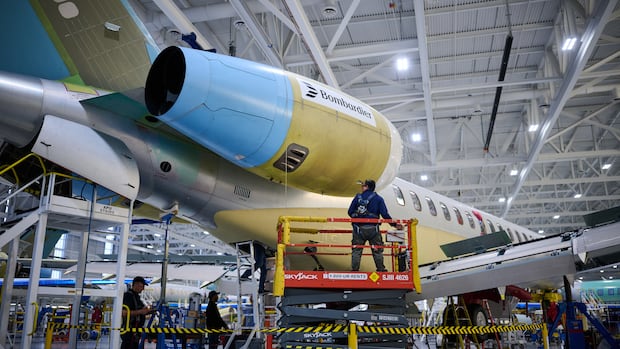
U.S. President Donald Trump stated in a social media update on Monday that Bombardier, based in Montreal, would not be permitted to sell in the U.S. unless it initiated manufacturing within the country, despite the company’s existing operations there.
Kansas: From Republican Stronghold to Political Battleground
Kansas residents are already experiencing the consequences of the president’s policies. Midwestern farmers have witnessed near-record spikes in diesel prices, which fuel their tractors and combines due to the Iran conflict. The state of Kansas is transforming into a political battleground as Republicans and Democrats vie for dominance in a region typically dominated by the GOP ahead of the upcoming midterm elections.
On Monday, Trump mentioned that a conversation with Kansas Republican Senator Roger Marshall played a role in his decision to retract his threat against Bombardier. Current polls indicate that Marshall is in a tight race with Democrat Adam Hamilton in a state that has not elected a Democrat to the Senate since 1932.
Last month, Trump indicated he might prohibit Bombardier aircraft sales in the U.S. unless the company relocated its operations there, despite warnings from experts regarding the potential negative impact on American employees.
“NO MORE SELLING BOMBARDIER IN THE UNITED STATES!” he wrote on social media on September 7. “If they want our Market, they must build here, and stop treating America like a ‘piggybank.”‘
Bombardier Affirms Commitment to the U.S. Market
In response, Bombardier stated it spends over $2.5 billion annually on approximately 2,800 American suppliers across 47 states, indirectly supporting tens of thousands of jobs.
“The American aerospace sector clearly benefits from trade and exports,” Bombardier declared in September, echoing the president’s rhetoric regarding success and trade surpluses.
Last week, the company opened a skills training center for new aircraft technicians and mechanics in Wichita, part of a $50 million investment in the location.
“Our recently announced investments and the newly opened North American Learning Center will ensure high-skilled jobs for many years ahead,” a Bombardier representative stated on Tuesday in a message to CBC News. “We take pride in our dedicated workforce in Wichita and across all 20-plus states where Bombardier employs staff.”
According to the U.S. Aerospace Industries Association, America enjoys a $109 billion aerospace and defense trade surplus globally.
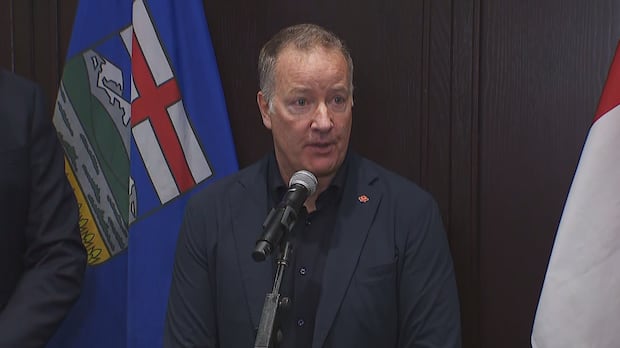
When questioned about U.S. President Donald Trump’s threat regarding Bombardier’s ability to sell aircraft in the U.S., Secretary of State for Defence Procurement Stephen Fuhr remarked that the Montreal-based manufacturer is significant for both nations and ‘provides employment for tens of thousands of individuals in the United States.’
Bombardier completes the final assembly of its Challenger and Global business jets in Canada, while more than half of its revenue is generated from American clients.
“We consider the removal of this regulatory uncertainty as beneficial for market sentiment, as it alleviates a significant headline overhang for investors,” noted James McGarragle, an analyst at RBC Dominion Securities.
According to him, Trump’s threat did not result in any “tangible impact” on American demand for luxury jets in the six weeks that followed.
On Tuesday, Bombardier’s shares climbed by $13.85, or approximately 4.5%, closing at $325.32.
Despite tariffs imposed on steel, aluminum, and other products, aerospace manufacturing remains significantly interconnected across North America and beyond.
Analysts point out that the majority of Bombardier aircraft contain at least 40% U.S. components, with over half of the ultra-long-range Global 7500 luxury jet’s value coming from American parts.
Excluding a major manufacturer from the market would “certainly” lead to revenue and job losses for American parts suppliers, stated National Bank analyst Cameron Doerksen last month.
A ban would also be “extremely disruptive” for numerous American jet fleet operators awaiting deliveries from Bombardier, he added.
Trump’s aggressive post came just one day before Ottawa’s retaliatory tariffs on U.S. goods took effect on September 8, which was a reaction to the 50% duties Washington imposed on Canadian products in August.
Following that, Trump implemented bans on various Canadian alcoholic beverages, some dairy items, motorcycles, and raised tariffs on several other goods.
This September post on Truth Social marked the second instance in which Bombardier has been in Trump’s sights this year.
Earlier in January, he specifically targeted Bombardier with a warning to ground all Canadian-made planes and impose a 50% tariff unless Ottawa permitted the sale of Gulfstream business jets—manufactured in Savannah, Georgia—signifying an earlier spike in trade tensions between the nations.