

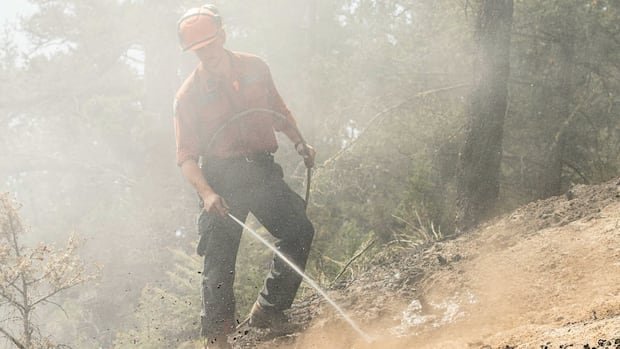

The Bald Range fire has caused damage to approximately 150 structures in the region, as per initial assessments by the Regional District of Okanagan-Similkameen. Evacuees from Summerland and surrounding areas have started to return, with more expected to come back in the upcoming days. The B.C. Wildfire Service anticipates a shift in firefighting efforts towards the northwest, with hotter and drier weather conditions forecasted for the week ahead. Presently, around 130 wildfires are active across British Columbia, primarily ignited by lightning strikes.
The Regional District of Okanagan-Similkameen disclosed that the Bald Range fire has led to the destruction or damage of about 150 structures. Graham Statt, the chief administrative officer of the District of Summerland, mentioned that approximately 40 of these structures were within the municipality’s boundaries. Efforts are underway to contact property owners affected by the fire, though it remains uncertain which types of structures have been impacted, including whether any were residential homes.
Summerland Mayor Doug Holmes confirmed the completion of damage assessments, allowing more residents to return home following the evacuation orders triggered by the Bald Range wildfire, which started on August 7. A portion of the previously evacuated properties is now on evacuation alert, with specific alerts in place for properties east of Highway 97 and the Trout Creek neighborhood on the west side of the highway.
As firefighting crews address lingering hot spots in Summerland, they have made progress in suppressing the fire closest to residential areas. The focus is expected to shift towards the northwest, where the blaze is encroaching into forested regions amid worsening weather conditions. Residents are advised to anticipate ongoing ground fires and smoke within the fire perimeter in the coming weeks, a common aftermath of significant wildfires.
Despite the challenges posed by the wildfires, efforts are being made to support affected residents. The BCWS has highlighted the prolonged presence of smoke in central and southern British Columbia, with light winds prevailing at the beginning of the week. Environment Canada has issued air quality warnings for large parts of southern B.C. due to wildfire smoke, affecting and potentially impacting areas over the next couple of days.
International assistance, including firefighting personnel from various regions, has been mobilized to aid in combating the wildfires in British Columbia. Conditions remain unpredictable around the most critical fire zones, with rapid weather changes influencing fire behavior. The Bald Range wildfire, one of the largest active fires in the province, continues to burn uncontrollably, emphasizing the ongoing challenges faced by firefighting teams.
In conclusion, the wildfires in British Columbia persist, with efforts ongoing to manage the impact and support affected communities as they navigate the aftermath of these devastating fires.