

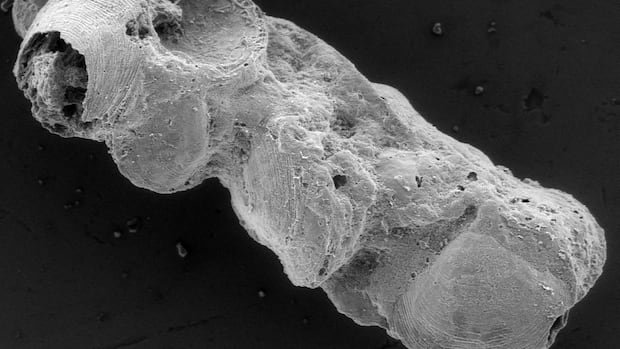

Long before the age of dinosaurs, a surge in biodiversity led to the emergence of early forms of modern animals and an increase in fecal matter. A recent study sheds light on the significance of analyzing coprolites, or fossilized feces, in understanding ancient Earth ecosystems, nutrient cycles, and animal interactions. Published in the journal Trends in Evolution & Ecology, the research delved into fecal fossils from the Cambrian period, dating back about 540 million years.
By examining fecal records from ancient worms, invertebrates, and mollusk-like creatures, scientists discovered that fecal matter played a crucial role in enhancing deep-water ecosystems’ habitability and nutrient availability during that era, long before the existence of dinosaurs. The abundance of feces during the Cambrian period holds key insights into the origins of present-day ocean ecosystems, according to the study.
Julien Kimmig, a co-author of the study and head of the paleontology division at the Karlsruhe Natural History Museum in Germany, emphasized the importance of recognizing the impact of fecal matter on sustaining both ancient and contemporary marine ecosystems. The study’s findings underscore the vital role feces played in shaping past and present ecosystems, driving evolution and environmental adaptations.
Analyzing hundreds of coprolites from various global deposits, Kimmig and co-author Russell Bicknell examined fecal remains from burrowing worms, arthropods, brachiopods, and hyoliths. These fossils, ranging from microscopic to the size of rabbit droppings, provided valuable insights into evolutionary patterns, dietary habits, and ecosystem dynamics during the Cambrian Radiation.
The study’s implications extend beyond understanding ancient animal life to unraveling the intricate ecological web that shaped the Cambrian Explosion. By studying coprolites, researchers gain a deeper understanding of how past ecosystems responded to environmental changes, offering valuable lessons for predicting future ecological scenarios.
Paleontologist Karma Nanglu from the University of California Riverside highlighted the pivotal role of the Cambrian Radiation in establishing the diverse array of modern animal groups. The study’s examination of fecal matter fluctuations between the Ediacaran and Cambrian periods sheds light on the evolutionary transitions that fueled the emergence of present-day oceanic biodiversity.
Karen Chin, a paleontologist at the University of Colorado Museum of Natural History, emphasized the importance of coprolites in unraveling prehistoric interactions among organisms and their environments. Studying fossilized feces provides unique insights into ancient diets, ecological relationships, and nutrient cycles, enriching our understanding of past ecosystems and biological adaptations.
As researchers continue to explore the hidden stories preserved in coprolites, the study advocates for a deeper appreciation of these often-overlooked fossils and their invaluable contribution to unraveling Earth’s ancient mysteries.