

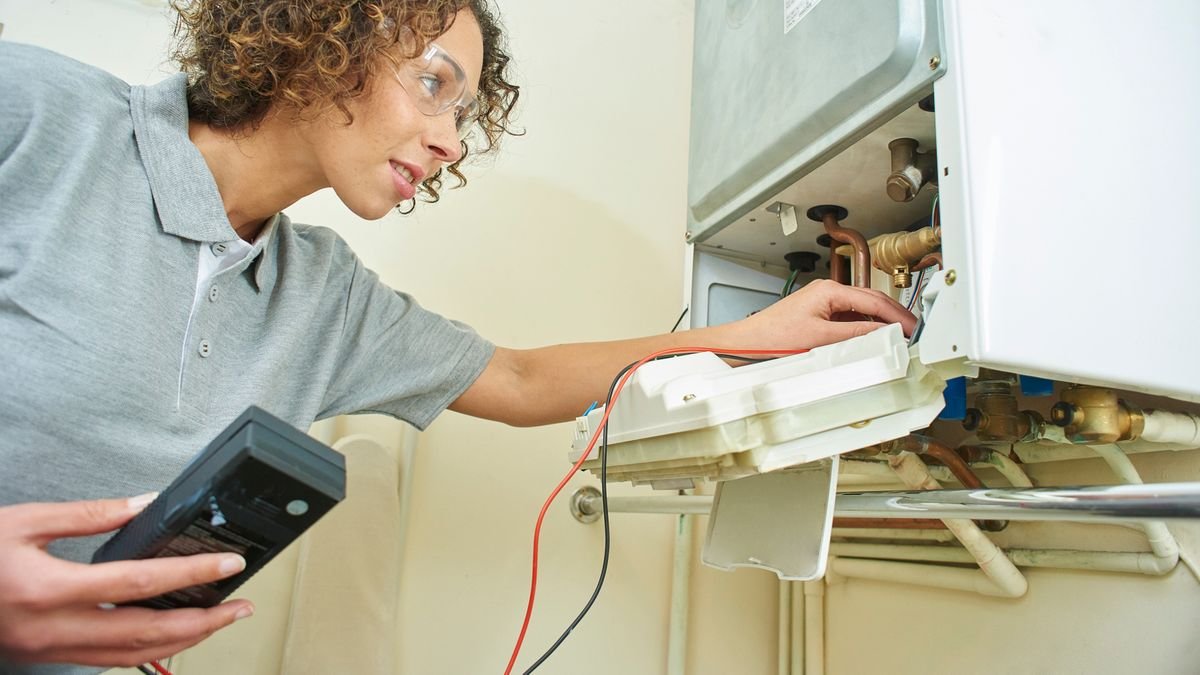

As we approach December and face dropping temperatures, it’s crucial to familiarize yourself with how your heating system operates.
If your boiler is acting up and you’re concerned about the cost of calling an engineer, here are some tips to consider. Additionally, we will explore the value of insurance policies that cover home emergencies.
Upon moving into a new flat, I struggled to make the new thermostat function properly. Despite my efforts to adjust it, the thermostat remained inactive until I discovered another one in a kitchen drawer. After inserting batteries, the heating system finally sprang to life!
Understanding how your thermostat functions is essential, yet surveys consistently reveal that many people find thermostats perplexing. Often, individuals set a temperature and rarely adjust the dial. The recent energy cost crisis has prompted more individuals to become familiar with their heating systems, invest in smart thermostats, or consult their boiler manuals. Nonetheless, for many, the heating system remains a mystery.
Every year, individuals spend substantial amounts on emergency callouts for issues with thermostats that could be easily fixed for less than £1. One common unnecessary callout involves thermostats simply needing a battery replacement. Confusing symbols flashing on the boiler often lead to unnecessary calls, as the boiler fails to receive the expected instructions. Similarly, smart thermostats may experience malfunctions, with a blinking screen typically indicating important system operations such as software downloads or frozen functions.
If your boiler continues to malfunction, conduct basic checks like adjusting dials, pressing the ‘boost’ option, and observing the boiler’s response. Repressurizing the boiler, though potentially intimidating for non-technical individuals, is usually a straightforward process. Before attempting this task, carefully review the steps and ensure you are comfortable with the procedure to avoid leaks and potential hazards.
In case you cannot locate the boiler guide or find it incomprehensible, online resources and YouTube tutorials can offer helpful guidance. It is advisable to attempt only simple tasks such as repressurizing the boiler and avoid dismantling it based on online instructions.
If your radiators are not heating adequately, bleeding them to release trapped air in the system may be necessary. Energy companies often provide online guides for this process. It is recommended to bleed radiators annually, even if they appear to be functioning well, to maintain optimal heating efficiency.
Consider the cost-effectiveness of obtaining a policy to cover boiler breakdowns, as emergency engineer callouts can be expensive and vary based on the issue. Boiler or home emergency insurance policies can provide financial protection, with some offering coverage for as little as a few pounds per month.
When selecting a boiler or home emergency policy, be mindful of the type of contract, callout fees, coverage details, and limitations. Ensure the policy includes a 24/7 emergency helpline, and clarify any waiting periods for making claims. Additionally, verify coverage for older boilers and explore add-on options through existing home insurance policies for potential cost savings.
To prevent last-minute issues, experts recommend periodically running the boiler for short intervals to detect potential problems and prevent pipe damage. Adjust the thermostat to a lower setting when away for extended periods, such as during the Christmas holiday.
By maintaining a proactive approach and understanding your heating system, you can mitigate potential issues and ensure efficient operation throughout the winter months.