

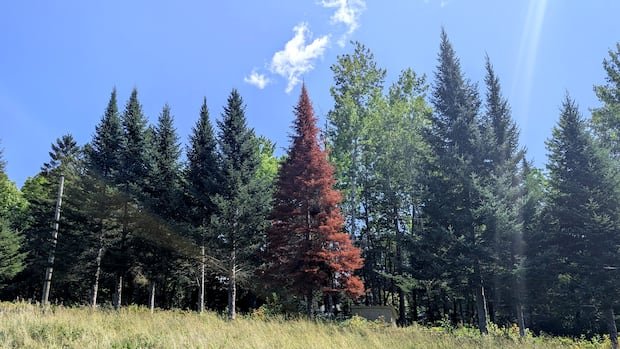

Balsam fir trees in New Brunswick are showing signs of distress, turning red and withering following the severe drought experienced last summer, prompting concerns about the fate of these iconic trees in the region. Professor Anthony Taylor, a forestry researcher at the University of New Brunswick, has been closely monitoring the situation, noting reports from woodlot owners and witnessing the detrimental effects firsthand. The vibrant evergreens, often sought after for Christmas trees, are gradually losing their vitality as they transition from green to red hues and eventually succumb to the harsh conditions.
Taylor, who has been investigating the impact of climate change on New Brunswick’s forests for an extended period, highlights a recurring pattern where balsam fir trees suffer significant die-offs in the aftermath of exceptionally hot and dry summers, such as in 1986 and 2018. He explains that prolonged warm and dry weather, like the drought experienced last year, hampers the growth potential of balsam firs significantly. The trees’ ability to photosynthesize is disrupted under drought stress, leading to stunted growth and insufficient energy production required for vital metabolic functions and defense mechanisms.
The shallow root system of balsam firs exacerbates their vulnerability during dry spells, impeding their access to essential water sources. Peter McKeil, a woodlot owner in Burtt’s Corner, has observed the alarming transformation of his trees since June, noting a progressive reddening from the lower branches upward. The ongoing die-off has already claimed around 100 trees on his property, prompting McKeil to adjust his harvesting strategies to salvage the remaining fir trees before they meet the same fate. Despite salvaging some lumber from the affected trees, he anticipates further losses and expresses concerns about the future survival of the species in the face of worsening climate conditions.
Taylor underscores the urgency for climate action in light of the visible impacts on balsam fir trees, likening them to a warning signal for the broader environmental challenges posed by climate change. He stresses the need for a shift away from fossil fuel reliance and unsustainable forestry practices to mitigate the escalating impacts of climate change on vulnerable ecosystems. Taylor hopes that his research findings will catalyze meaningful change and foster greater awareness of the need for immediate action to address the underlying causes of environmental degradation.