

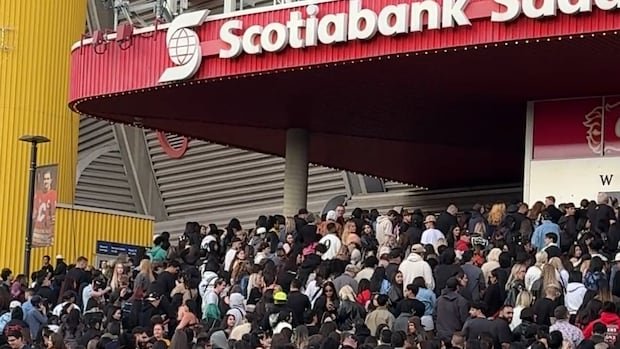

Amandeep Walia had eagerly anticipated watching Ne-Yo and Akon perform in Calgary for several months. However, he and his spouse encountered significant delays at the Scotiabank Saddledome, both in gaining entry and waiting for the concert to commence. Walia expressed surprise at the extended delay, estimating that the evening cost them around $700, covering tickets, a babysitter, and food.
Attendees with floor and lower level seats were confined to the concourse while the venue was still being set up, preventing them from accessing their designated seats. Walia raised concerns about the disorganization of the event, considering it a potential safety hazard.
Originally scheduled for 8 p.m., the Jun. 20 concert was rescheduled to 9 p.m., but the performance did not start until approximately 10:45 p.m. Despite the delayed start, Walia acknowledged that the show itself was impressive, emphasizing his disappointment at missing out on the full experience due to the delay.
This incident in Calgary is not an isolated one this summer, as other high-profile concerts have also experienced significant delays. Jay-Z’s final show at Yankee Stadium in New York began after midnight, while heavy rain forced Harry Styles to delay a performance in Mexico City.
The delayed concerts have prompted questions among fans about what exactly a concert ticket guarantees. Entertainment lawyer Kurt Dahl explained that consumers have limited rights, primarily guaranteeing the seat purchased and the occurrence of the show. However, the fine print often includes clauses allowing for event date and time changes, leaving ticket holders with little recourse in case of delays.
Ashish Sharma from the Consumers Council of Canada noted the lack of statutory rights for concert delays, suggesting that customers should be promptly informed when significant delays occur. With consumers investing more in live entertainment, the costs of attending a delayed event extend beyond just the ticket price.
While the ticket contracts offer limited rights, Dahl suggested that consumers may have more power through public pressure to hold artists accountable for delays. Despite the delays, Walia acknowledged the performers’ efforts but believed that compensation or credits should be provided for the inconvenience caused by the late start.