

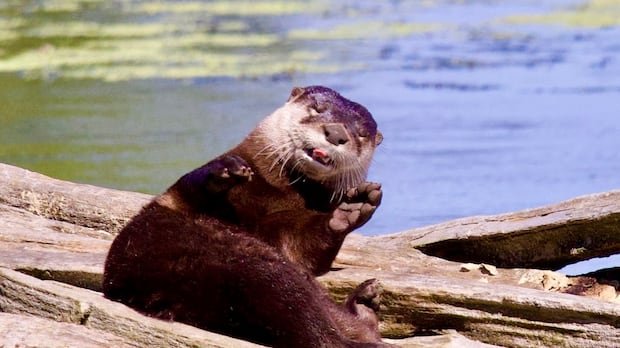

Wildlife enthusiast Terry Chettle was capturing images of a green heron at the Grimsby Wetlands in early August when a surprising encounter unfolded. A river otter unexpectedly appeared and engaged in playful antics with the heron, much to Chettle’s and the bird’s amazement.
The otter’s presence was a rare sight in the region, prompting Chettle to seize the moment and photograph the otter as it posed on a log. Describing the experience, Chettle mentioned how the otter entertained him by sticking out its tongue and waving.
During the same outing, Bruce and Laurie Mackenzie encountered Chettle, who directed their attention to the otter. Bruce Mackenzie acknowledged the rarity of the sighting, emphasizing that it was likely the first such sighting near the wetlands in recent times. To date, there have been no reported sightings of the otter following that particular weekend.
The Grimsby Wetlands, previously a sewage storage site managed by the Hamilton Naturalists’ Club, now spans approximately 12 hectares along Lake Ontario’s South Shore. Bruce Mackenzie, involved with the naturalists club as the wetlands’ project manager, highlighted how the otter sighting reflects positively on habitat restoration efforts and water quality. Notably, the wetlands have previously attracted rare species like least bitterns, which are endangered in Ontario.
Regarding the resurgence of otters in the region, Laura Timms, a program manager at Credit Valley Conservation, described otters as a conservation success story. The Credit River watershed, overseen by the conservation authority, includes significant areas in Mississauga and Peel Region. A recent publication by the authority in 2025 documented the comeback of river otters in the region, indicating a notable increase in sightings over the years.
River otters, which faced population declines in the 1800s due to various factors like hunting and habitat destruction, are now experiencing a resurgence across North America. Timms emphasized the positive impact of environmental restoration efforts in rejuvenating degraded habitats, leading to the recovery of otter populations and overall biodiversity.
While celebrating the return of otters, Timms cautioned that challenges persist for other species due to habitat loss, particularly in wetlands crucial for supporting diverse wildlife, carbon sequestration, and flood prevention. She stressed the ongoing need for habitat restoration and conservation to ensure the thriving existence of all species and foster more success stories akin to the otters’ resurgence.