

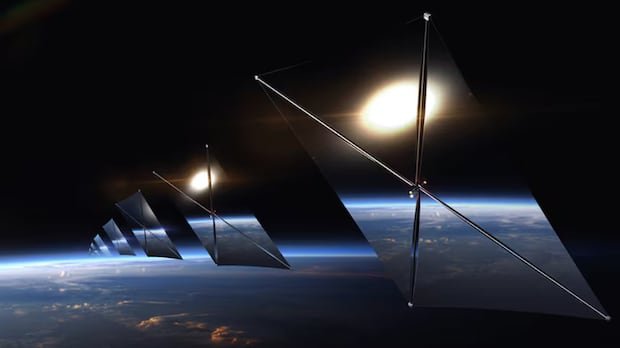

A group of astronomy specialists and enthusiasts in New Brunswick are adding their voices to the opposition against a U.S.-based company’s plans to use mirrors in space to offer artificial sunlight on demand for a fee. The company, Reflect Orbital, has labeled its initiative as “sunlight on demand” and intends to market it as a service for various applications such as agriculture, solar power infrastructure, search and rescue operations, and construction projects.
Mount Allison University’s astronomy professor, Catherine Lovekin, criticized the project, stating that it could have devastating effects by obstructing ground-based astronomy and backyard stargazing, which are already facing challenges due to the proliferation of satellites. Despite facing opposition from numerous individuals, the project received approval from the U.S. Federal Communications Commission in July.
Reflect Orbital plans to deploy a single mirrored “demonstration” satellite to test its technology and protective measures. The company aims to launch 50,000 satellites by 2035, which would reflect sunlight back to Earth, potentially illuminating areas at night as well. This massive satellite deployment could significantly impact astronomical observations and disrupt natural cycles, including circadian rhythms and nocturnal ecosystems.
Stéphane Picard, owner of an astro-tourism organization named Cliff Valley Astronomy, shares concerns about the project’s implications. He highlighted the importance of dark-sky sites in New Brunswick, which offer unobstructed views of the night sky by minimizing light pollution. Picard emphasized the significance of these sites for rural communities that rely on natural landscapes and night skies for tourism.
Chris Curwin, from Astronomy by the Bay in Saint John, expressed worries about the increasing light pollution and its detrimental effects on astronomy events. He emphasized the diminishing accessibility of natural phenomena like meteor showers and starlit skies due to urbanization and artificial lighting.
Reflect Orbital declined an interview but released a statement emphasizing its goal of providing clean and renewable energy when needed. The company assured that the artificial light would be targeted to specific areas, require permits for access, and be deactivated when not in use. Moreover, the company claimed to have engaged with experts to ensure that brightness levels are within acceptable limits for humans and animals.
Various astronomy experts and organizations globally have raised concerns about the project, including those in British Columbia and Australia, along with the Dark Sky Consulting and the American Astronomical Society. While the United Nations Office for Outer Space Affairs acknowledged that placing reflective objects in orbit is not prohibited, they stressed the importance of consulting with other states and developing regulations to manage such services.