

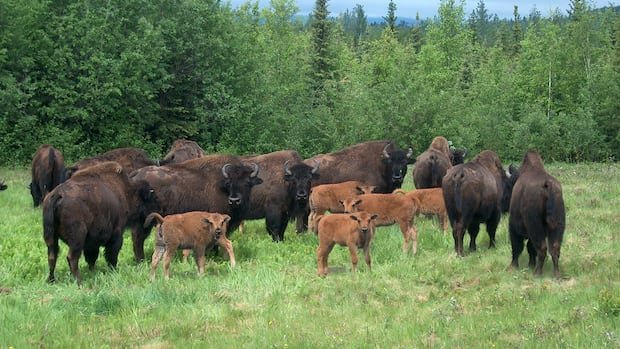

The N.W.T. Department of Environment and Climate Change (ECC) has reported a decrease in the number of bison collisions on roads. Between 2021 and 2025, there were 60 recorded collisions, but in 2026, only one has been reported so far.
Terry Armstrong, a bison ecologist with ECC, credits wildfires for the decline in collisions. He explains that fires cause bison to shift their usual locations, as they are drawn to newly burnt areas for fresh vegetation.
With extensive wildfires in recent years, more bison are opting for post-fire habitats over roadsides, leading to fewer collisions. This is positive news for the bison population in the N.W.T., as wood bison are considered a threatened species both regionally and nationally.
According to Armstrong, the current bison population is estimated to be several thousand, with ECC’s estimates placing it slightly above 2,500 individuals. Collisions between 2021 and 2025 resulted in the deaths of at least 76 bison, with Highway 3 being a hotspot for such incidents.
As the rutting season spans from August to September, encounters with aggressive bison on roads are more likely. Armstrong warns that during this period, bison are engaged in mating and territorial battles, increasing the risk of collisions.
Reduced visibility during dawn and dusk, as well as the absence of snow on the roads, further heighten the collision risk. Armstrong advises drivers to exercise caution, maintain distance from bison, and refrain from actions that may startle them.
He emphasizes the importance of respecting bison’s space, highlighting their significance as the largest land mammal in North America. Armstrong urges people to stay inside their vehicles and avoid any interactions with these unique and endangered animals.