

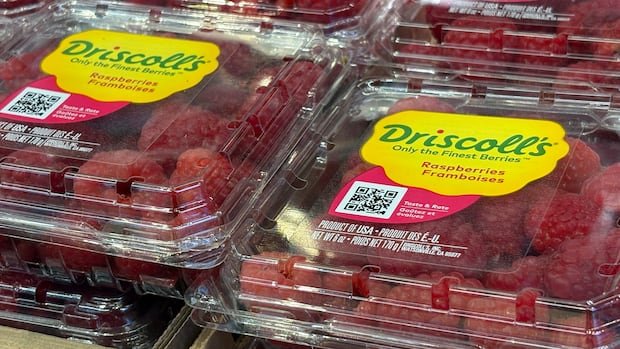

A Quebec Superior Court is being petitioned by attorneys to approve a class-action lawsuit against Driscoll’s, a prominent American fruit company. The legal action follows a CBC News report detailing accusations that Driscoll’s had shipped millions of pounds of berries to Canada with chemical residues exceeding regulatory limits between 2022 and 2024.
The lawsuit was initiated on behalf of a Quebec resident who regularly consumes Driscoll’s berries. It alleges that the multinational corporation failed to disclose to consumers the presence of pesticide residues or other chemicals in its berries that surpassed permissible levels in Canada. The legal document asserts that the lack of transparency in informing consumers in Quebec about these substances is further compounded by misleading representations of the products.
The lawsuit aims to encompass all individuals who have purchased Driscoll’s brand berries, such as strawberries, raspberries, blackberries, or blueberries, since January 1, 2022. The plaintiff seeks to represent all affected consumers to seek compensation and punitive damages against the company’s questionable practices.
In Quebec, it typically takes a minimum of one year for a judge to assess whether a lawsuit meets the necessary criteria for authorization.
Driscoll’s has refuted the allegations made by former employee David Harada, which raised concerns about food safety in Canada. The Canadian Food Inspection Agency (CFIA) confirmed conducting inspections on Driscoll’s berries nationwide between 2022 and 2024, discovering chemical levels above the legal limits in Canada, including fungicides and insecticides like bifenthrin, iprodione, and captan. Despite these findings, no recalls were issued, and corrective measures were reportedly taken.
Harada filed a lawsuit in California against Driscoll’s for alleged retaliation after raising concerns. Driscoll’s denied the claims, stating that they take all concerns seriously, investigate them thoroughly, and address any issues accordingly. The company asserted that it has adjusted its controls to comply with Canadian standards and maintained that it never knowingly shipped unsafe products.
In response to the class-action filing in Quebec, Driscoll’s has disputed the allegations and expressed readiness to address the claims through legal proceedings. The company emphasized its commitment to food safety, compliance, and consumer trust, highlighting its longstanding efforts to ensure berry quality and safety in accordance with Canadian regulations.