

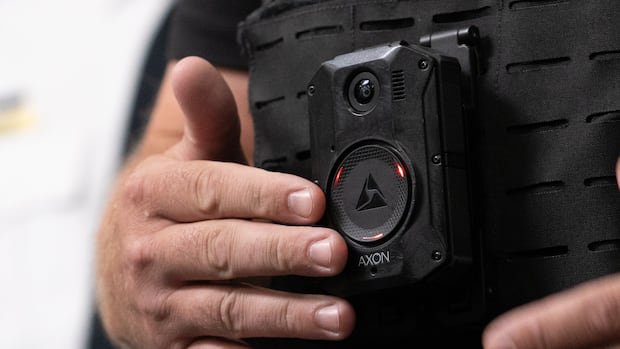

The Edmonton Police Service made an announcement on Tuesday declaring their pioneering initiative to utilize an artificial intelligence (AI) tool from Axon Enterprise for testing facial-recognition-enabled body cameras. Acting Supt. Kurt Martin emphasized during a press briefing that the facial-recognition technology is intended to complement rather than substitute human investigative efforts. Trained officers will verify any identifications made by the software to ensure accuracy.
The primary aim of integrating this technology is to enhance public and officer safety while upholding privacy standards. Axon Enterprise, a company based in Arizona, specializes in developing military, law enforcement, and civilian technology products that comply with legal regulations in various jurisdictions. Commencing Wednesday, up to 50 Edmonton police officers currently equipped with body cameras will adopt Axon’s facial-recognition-enabled cameras for the remainder of the month.
The decision to implement this technology comes in response to the 2023 provincial government mandate requiring all Alberta police officers to use body cameras, with EPS initiating the rollout in 2024. Martin clarified that the collaboration with Axon for this trial is distinct from the provincial directive. The trial period is designed to assess the feasibility and functionality of facial recognition on body-worn cameras within policing operations.
The trial will focus on utilizing mugshots to identify individuals flagged for safety concerns or associated with previous interactions. This technology will aid in assessing safety risks and identifying individuals with outstanding warrants for serious offenses such as murder, aggravated assault, and robbery. The system will be rigorously monitored to ensure timely execution of warrants and adherence to legal protocols.
During field operations, the facial-recognition system on the body cameras will only be activated by officers when necessary, starting the recording process. The system operates in a silent mode during active recording, automatically running the facial-recognition technology without alerting officers on duty. Data collected from individuals within close proximity to the body cameras is compared against the EPS database of persons of interest in the cloud. Unmatched facial data is promptly discarded to maintain data integrity.
Following the capture of footage, trained EPS officers will review the facial-recognition data to evaluate its accuracy and effectiveness in identifying matches. Concerns have been raised regarding the ethical implications and privacy considerations surrounding the use of facial-recognition technology. Stakeholders have emphasized the need for thorough impact assessments and safeguards to protect individuals’ rights and privacy in interactions with law enforcement.
The Edmonton police commission and the chief’s committee will conduct a comprehensive review of the trial results before making a decision on the future implementation of facial-recognition body cameras in 2026.