


Approximately 2,000 evacuees from various parts of northwestern Ontario have made their way back home following a surge in wildfire activity in mid-July. However, as of Friday, around 829 individuals are still displaced, as reported by officials from Ontario’s Ministry of Emergency Preparedness and Response.
Throughout this summer, wildfires prompted the evacuation of over a dozen communities in the region, predominantly inhabited by First Nations people. Unfortunately, two communities, Namaygoosisagagun First Nation (also called Collins First Nation) and Whitewater Lake First Nation, were entirely devastated by the fires.
As the wildfire threat subsides in most areas, Kiashke Zaaging Anishinaabek (also known as Gull Bay First Nation) lifted its state of emergency that had been in effect since mid-July. The chief and council of Gull Bay are now actively encouraging evacuees to return to their homes.
Chief Wilfred King of Gull Bay expressed concerns about the Ontario government’s decision to revoke wildfire implementation and evacuation orders around the community, emphasizing ongoing risks to the members and infrastructure. Despite his cautious optimism about reduced forest fire hazards, King, accompanied by two band councillors, conducted an aerial assessment to gauge the situation firsthand.
According to Chief King, although some hot spots were identified, the Ministry of Natural Resources assured proper monitoring of the fires’ west side. The observation did not reveal significant fires or smoke, leading to increased confidence in the improved conditions.
Nonetheless, King continues to advocate for a public inquiry into the province’s wildfire response, citing inadequate communication with First Nation leaders and insufficient emergency preparedness measures. He emphasized the need to address unresolved issues from a month ago.
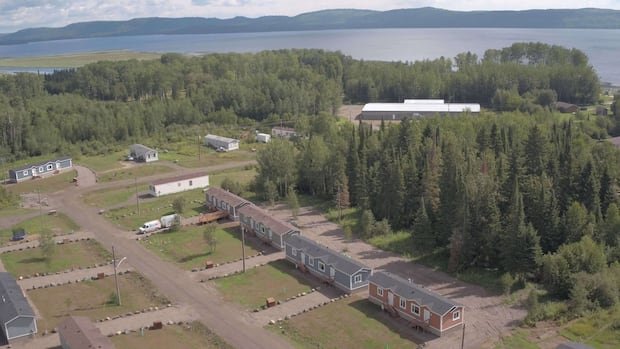
Gull Bay First Nation, located about 215 kilometers north of Thunder Bay, is an Ojibway community with a population of around 370 residents. While road access to Gull Bay has been restored, Highway 527 between Kopka River and Armstrong remains closed in both directions, along with a significant section of Highway 811 due to nearby wildfires.
Presently, there are nearly 140 wildfires burning across Ontario, with the majority concentrated in the northwest region. Notably, Thunder Bay 36, Dryden 34, Dryden 35, and Thunder Bay 56 are among the active wildfires. These fires collectively form the Rinker Lake Complex.
Firefighting efforts across the Rinker Lake Wildland Fire Complex involve crews from Manitoba, Nova Scotia, Ontario, and soon, firefighters from Mexico. Despite the ongoing suppression efforts, fire activity in the complex remains low.
The region faces a range of wildfire hazards from low to high, with the Kenora and Dryden fire management sectors experiencing areas of high hazard. While most evacuees from Gull Bay have returned unharmed and without property damage, Chief King stresses the importance of remaining vigilant as the official wildfire season extends until October 31.
In the event of a future evacuation necessity, Gull Bay First Nation assures readiness to take necessary actions to ensure the safety of its community members.