

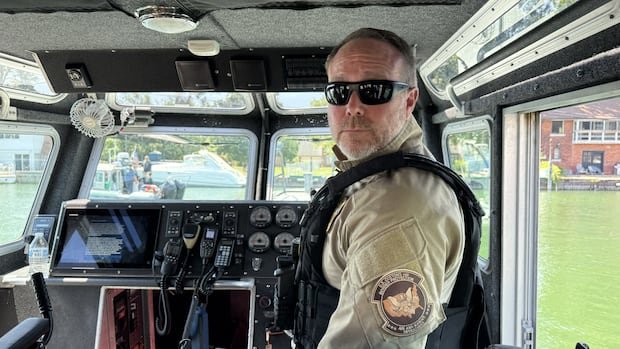

Tim Thayer, a marine interdiction agent, operates a U.S. Customs and Border Protection boat equipped with four 350-horsepower engines along the Detroit River. His duties involve patrolling the waterways forming the Canada-U.S. border in the region. The Detroit sector, covering Michigan, Ohio, Indiana, and Illinois, presents a unique challenge as the entire border spans 1,388 kilometers of water.
The geographical positioning of Windsor, Ontario, south of Detroit, connected by bridges and a tunnel, witnesses around seven million cross-border movements annually. Thayer keeps a watchful eye on the Windsor shoreline during enforcement patrols, monitoring potential illegal activities such as people, narcotics, and firearms trafficking between the two countries.
Although the Detroit River area has a historical association with smuggling during the Prohibition era, present-day enforcement faces the challenge of regulating recreational boaters alongside potential illicit activities. Intelligence and collaborative partnerships are crucial for securing the region effectively.
Recent statistics indicate that the flow of illegal drugs and firearms is primarily northward, with a significant portion of seized guns in Ontario traced back to the United States. Despite political tensions, U.S. border officials emphasize continued collaboration with Canadian counterparts to address cross-border security issues.
The narrative surrounding drug trafficking accusations between Canada and the U.S., particularly regarding fentanyl, is complex. Data reveals a stark contrast in fentanyl seizures between the Canada-U.S. and Mexico-U.S. borders, indicating differing levels of drug trafficking threats. The working relationship between U.S. and Canadian border agencies remains intact despite ongoing political discourse.