

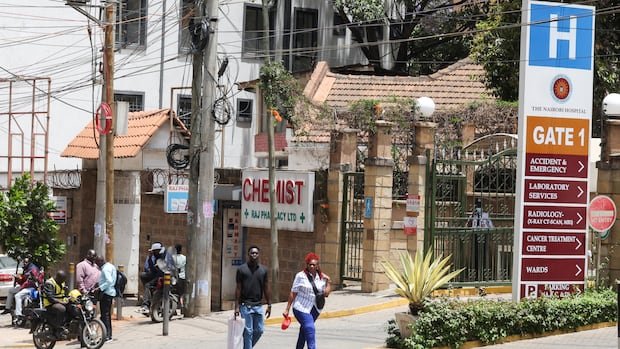

Kenyan officials confirmed the first imported case of Ebola from Congo, marking Kenya as the latest country impacted by the rapidly spreading outbreak. Health Minister Aden Duale disclosed that a Kenyan national, who had arrived in the country from Congo via Uganda on Saturday, was isolated and treated at Nairobi Hospital. The individual tested positive for Ebola and passed away on Monday evening.
Ebola, a highly contagious virus, spreads through contact with bodily fluids like blood, vomit, or semen, as well as contaminated surfaces such as clothing and bedding. The current outbreak, declared in mid-May after months of spreading in a remote area of eastern Congo, has seen over 8,400 cases and more than 4,000 deaths, making it the fastest-growing outbreak of the disease in history.
Kenya had not previously experienced an Ebola outbreak, as stated by the Kenya Medical Research Institute. Health Minister Duale assured that Kenya was well-equipped to handle Ebola cases, having trained close to 5,000 healthcare workers nationwide on prevention and management protocols. Kenya now joins three other countries with reported Ebola cases in the ongoing outbreak.
In response to the situation, health authorities in Kenya have heightened surveillance at border points and are actively monitoring for potential additional cases. The tracing of passengers on the same flight from Uganda has begun, with 28 contacts identified, including family members and healthcare workers who had contact with the patient. Another 23 passengers from the same flight are under tracing.
The patient, who had lived in Congo for seven years and fell ill a month ago, sought treatment at multiple hospitals before traveling to Nairobi. The identified contacts will undergo a 21-day isolation period and will be released following negative virus test results, according to Patrick Amoth, the Health Ministry’s director.
Efforts in Congo, where the outbreak has spread to seven provinces, face challenges including attacks on health teams, misinformation, and rebel violence hindering access to treatment centers. Responders liken the situation to fighting a massive fire, with the outbreak intensifying in North Kivu and South Kivu provinces despite a slowdown in Ituri province.
Doctors Without Borders’ Stephanie Hoffmann described the situation as battling multiple outbreaks of varying intensity in different locations simultaneously. The World Health Organization has cautioned that this outbreak could surpass the deadliest Ebola epidemic in history, which claimed around 11,000 lives in West Africa over a decade ago.