

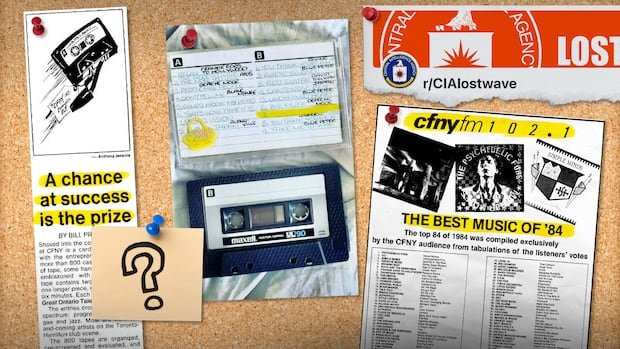

More than four decades ago, an individual recorded a tune from the radio onto a cassette tape. While this was a common practice in the 1980s, all details connected to the song have vanished, leading to what internet detectives refer to as a lostwave – a melody devoid of any accompanying information. The track, currently known as “CIA,” remains a mystery with no known artist, recording location, or official title.
Enthusiasts online have been delving into the origins of this song for an extended period, and the investigation has now extended to the Waterloo region in southern Ontario, with hopes that locals may hold vital clues. Joe Gaschler, a moderator on a Reddit forum dedicated to unraveling the mysteries behind lostwave songs, mentioned that “CIA” represents a 42-year-old unresolved Canadian musical case.
According to Gaschler, numerous individuals have contributed to the quest to identify the band behind the mysterious song, either by analyzing the track for hints or responding to inquiries from amateur music detectives. The only known facts about the song are that it aired on CFNY-FM, now known as 102.1 The Edge, and was likely recorded onto tape in the mid-1980s, possibly around 1984.
The song exudes a typical 1980s vibe, reminiscent of bands like A Flock of Seagulls, Platinum Blonde, The Cure, The Romantics, or Duran Duran. Gaschler revealed that the search has broadened to include the Kitchener-Waterloo area, with speculations suggesting that the band may have originated from a location outside the Greater Toronto Area.
The investigation into “CIA” has been ongoing for years, with passionate individuals dedicating countless hours to pursuing leads. Despite efforts to uncover the song’s origins, including analyzing vocals, instruments, and historical contests, the true identities of the performers remain elusive.
Kate Galloway, an assistant professor of popular music at Wilfrid Laurier University, highlighted the unique challenge posed by identifying recordings that surface online. She emphasized the paradox of the internet’s vast resources coexisting with the difficulty in attributing certain recordings to their creators.
The pursuit of the song’s origins has fostered a sense of community among enthusiasts, who engage in collaborative efforts to unearth the musicians behind the enigmatic track. The communal aspect of the search adds to the intrigue and nostalgia surrounding lostwave mysteries, keeping participants engaged in the quest for answers.
As the search for the band behind “CIA” continues, Gaschler expressed admiration for the undiscovered talents that emerge from this exploration. He emphasized the importance of acknowledging and celebrating the artists behind these obscure but beloved songs, hoping that the mystery will one day be solved to honor their musical contributions.