

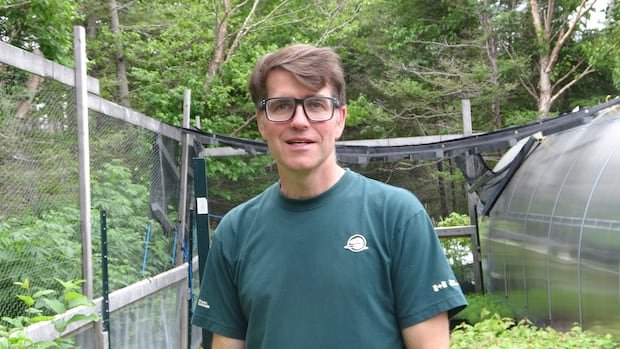

Crews in western Newfoundland’s expansive national park are undertaking a massive tree-planting initiative to aid forest recovery following a once-prolific moose population decimation. Darroch Whitaker, an ecosystems scientist with Parks Canada at Gros Morne National Park, revealed that over 730,000 trees have been planted since 2023 in areas previously transformed into grasslands by voracious moose herds. The plan is to continue planting for another three years, aiming to reach 1.25 million trees covering approximately four square kilometers.
The reforestation effort goes beyond simple restoration, as Whitaker emphasized the strategic planting of tree varieties capable of thriving in warmer climates. This approach aims to establish resilient forests better equipped to withstand the impacts of climate change over the coming decades. Gros Morne National Park, renowned for its majestic fiords and boreal woodlands intersected by rivers and cascades, spans 1,805 square kilometers and stands as the second-largest national park in Atlantic Canada.
Moose have long been abundant in Newfoundland, with Gros Morne experiencing a particular surge due to historical hunting bans that shielded them from their sole island predator, humans. In the 1990s, the park hosted around 6,500 moose, with some regions boasting densities of six or more animals per square kilometer. Their unchecked presence led to widespread defoliation, with young trees falling victim to the browsing herbivores.
To address this ecological imbalance, moose hunting was permitted in 2011, resulting in the population dropping to a more sustainable 2,000 moose. Subsequently, in 2023, tree planters began reforesting the meadows ravaged by moose grazing. Young saplings, typically two years old, are carefully cultivated at the Rocky Harbour tree nursery, where Whitaker and his team meticulously inspect them for potential threats.
The reforestation initiative involves a diversity of tree species, including black and white spruce, balsam fir, and “boutique trees” like yellow birch, white pine, and wild cherry predominantly found in the park’s southern regions. By utilizing seeds from these warmer climate-adapted trees, the planting strategy aims to ensure the future resilience of the forest against anticipated climatic shifts. Whitaker stressed the importance of proactive intervention, noting that trees lack the mobility to migrate in step with changing environmental conditions.
The ongoing efforts at Gros Morne National Park exemplify a forward-looking approach to conservation, combining ecological restoration with climate adaptation to safeguard the park’s biodiversity for generations to come.