

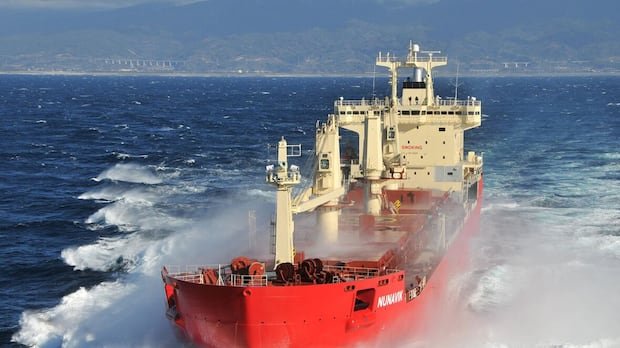

Premier Wab Kinew has disclosed that an estimated $70 to $80 billion will be required to construct an expansion project for the Port of Churchill, which includes an offshore liquefied natural gas (LNG) terminal in Hudson Bay. Recent studies indicate that ice-hardened freighters could navigate Hudson Bay safely beyond the existing four-month shipping season at the Port of Churchill. However, the studies caution that fully loaded LNG tankers, built to withstand sea ice, may face challenges maneuvering within the current port due to its shallow and narrow entrance.
A feasibility study commissioned by Arctic Gateway Group, the owner of the port and Hudson Bay Railway, highlighted the need for significant dredging, infrastructure modifications, or the development of an offshore loading facility to accommodate such vessels at Churchill. Comparatively, the construction of a liquefied natural gas terminal in Kitimat, B.C., which is situated in a protected inlet draining into the Pacific Ocean, cost $40 billion over a span of 12 years.
Despite concerns about the environmental impact, Premier Kinew expressed optimism following new research findings suggesting the feasibility of shipping LNG through icy waters. He emphasized the distinction between LNG and oil shipments, stating that LNG is perceived more akin to household propane. The Premier’s remarks came after the release of three studies supporting the extension of Churchill’s shipping season, with the potential for year-round shipping using ice-hardened vessels.
Arctic Gateway Group, in collaboration with shipping company Fednav, conducted a study outlining the requirements for enabling year-round shipping at Churchill. While the study indicated the feasibility of extending the shipping season using ice-hardened freighters, it emphasized the challenges posed by the dynamic ice environment of Hudson Bay and the navigational difficulties within the port’s estuary.
Further studies, including field research and simulation assessments, are recommended to address uncertainties and guide future decisions on expanding shipping operations. The proposed port expansion involves multiple components, including the acquisition of ice-hardened vessels and the construction of a gas terminal. The Arctic Research Foundation estimated the cost of ice-hardened vessels, highlighting a more cost-effective solution compared to icebreakers for navigating Arctic waters.
Premier Kinew intends to promote the Port of Churchill expansion to potential investors in Toronto, underscoring the economic potential of the project. However, the timeline and financial contributions from the federal government remain uncertain. The Arctic Gateway Group plans to enhance the Hudson Bay Railway infrastructure and upgrade storage and loading facilities at the Port of Churchill, aiming to make the port operational year-round.
Opposition Leader Obby Khan raised concerns about the project’s feasibility and the potential challenges presented by climate change, including impacts on the railway due to melting permafrost. While acknowledging the importance of developing the Port of Churchill, Khan criticized the lack of concrete plans, investor commitments, and Indigenous community involvement in the current proposal.