

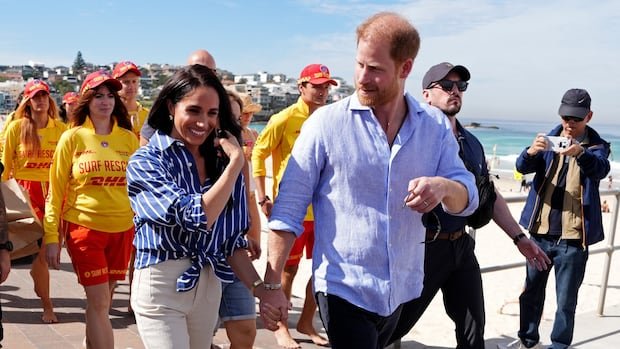

When Prince Harry and Meghan Markle come back to the UK this month, they will be re-entering a country that has been discussing them from a distance for the past six years. Their children, Prince Archie and Princess Lilibet, are set to start school in the UK in September, and reports suggest that the couple will reside privately outside London for an extended period as non-working royals.
There is anticipation about the couple’s return after their prolonged absence following a strained relationship with the British media, which partly led to their move to California. Will the tabloids’ interest in the couple diminish this time? Speculation about the plans and whereabouts of royals is common in Britain, but Harry and Meghan have often been portrayed in a polarized manner in the press, noted Steven Barnett, a communications professor at the University of Westminster.
The initial coverage included provocative headlines like the Daily Mail’s reference to Meghan’s mother as “(almost) straight outta Compton” and The Sun’s report on “Harry’s girl on Pornhub,” which involved the tabloid finding scenes from Meghan’s past TV role on a pornographic website and later apologizing for it. An analysis by The Guardian revealed that Meghan received significantly more negative media coverage compared to Kate Middleton.
Royal commentator Afua Hagan remarked that interest in the couple is expected to intensify upon their return to the UK. She believes that Harry and Meghan are better prepared this time and understand the challenges they may face. Barnett mentioned that there might be other current events occupying the British public’s attention besides the couple.
The recent legal setback in privacy lawsuits against the Daily Mail involving Prince Harry and others could potentially lead to more negative coverage, according to Barnett. The couple’s return coincides with a critical moment for the British media following the passing of Jason Arday, a Cambridge professor, sparking a debate on media scrutiny boundaries.
There have been comparisons drawn between the extensive media coverage of Arday and the treatment Meghan received. The discussion around Arday’s tragic death has raised broader issues concerning race, diversity, and representation in elite British institutions. Marcus Ryder highlighted the lack of diversity in British media, suggesting that Black individuals often face different standards of scrutiny and success compared to their White counterparts.
The narrative surrounding Arday’s life and career mirrors the complexities faced by Meghan as a Black woman navigating a traditionally privileged institution. As the couple transitions into their new non-royal status after residing in California for six years, much of the drama surrounding their departure has already been extensively covered. Ryder expressed hope that the media portrayal of Meghan reflects the genuine support and positivity felt by many, particularly Black women.