

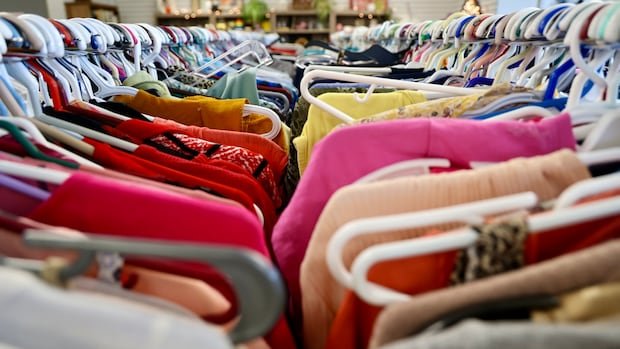

Kathy Broussard unveils a large pile of plastic bags filled with donated textiles at her store, estimating it to be about an eighth of the recent donations. The basement and two outdoor donation bins also receive a constant stream of items daily. Broussard describes the situation as an ongoing cycle with donations continuously coming in and going out.
Her team sorts through the donations, selling what they can, and offering unsold items for free after a month. Anything left after a day in the free bins ends up in the dumpster, a practice Broussard is keen to change to reduce landfill waste.
Hand in Hand, a non-profit thrift store in Halifax, has been struggling to find buyers for their surplus clothes since February. The increased dumpster pickups have added significant costs, impacting the charity’s finances and environmental efforts.
Other thrift stores also face similar challenges, with options for disposing of excess stock becoming scarce nationwide. The disruption in the used clothing market is causing concerns about the growing volume of textiles ending up in landfills.
Charlotte Genge, a textile circularity consultant, notes the abrupt halt in collection mechanisms for unsold stock, leading to increased dumping fees and environmental concerns. She predicts a rise in textile waste unless solutions are found.
The National Diabetes Trust, a clothing donation program supporting Diabetes Canada, has temporarily halted pickups from thrift stores in several provinces due to changing market conditions and increased donation volumes.
Value Village, a major buyer for non-profit collectors, has shifted its approach to sourcing items, prioritizing donations collected at its stores over bulk purchases from non-profits. This change reflects a broader trend in the industry.
Steven Bethell, co-founder of Bank & Vogue, a prominent used clothing exporter, highlights challenges in the export business, including rising costs and market competition. He emphasizes the need for adaptive strategies in the face of evolving market dynamics.
Genge emphasizes the need for government intervention to address overconsumption and improve recycling practices in the textile industry. She suggests policies like extended producer responsibility and enforced use of recycled materials to tackle the issue.
In conclusion, addressing the overconsumption of new clothing and enhancing recycling practices are crucial steps to reduce textile waste. Collaborative efforts involving industry stakeholders and government interventions are necessary to mitigate the environmental impact of the growing textile industry.