


Hurricane Lala weakened to a tropical storm on Sunday after bypassing Hawaii without making landfall. Despite this, it brought strong winds and heavy rain, causing nearly a meter of rainfall in some areas and triggering flash floods that washed away homes in Na’alehu and Wai’ohinu.
A search-and-rescue operation involving Civil Defence, the National Guard, and a coast guard helicopter was initiated to assist residents affected by the flash floods. The challenging conditions included rushing water, debris, and darkness, making rescue efforts difficult, as described by Hawaii County Mayor Kimo Alameda.
Tragically, one person lost their life in a vehicle accident in the South Point area of the Big Island. Honolulu faced severe weather conditions, with the Fire Department responding to numerous incidents such as downed trees, blown roofs, and power lines, as well as conducting a swimmer rescue operation.
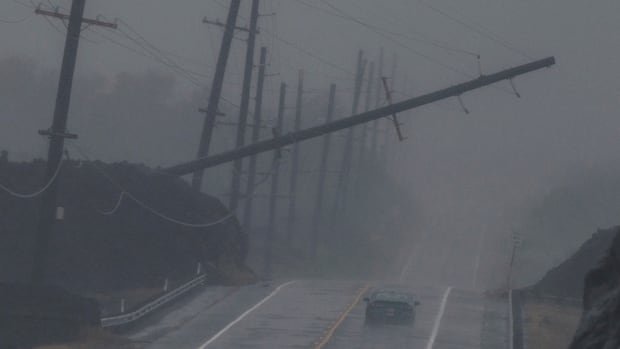
As the storm persisted, much of Hawaii remained under a flash flood warning, with the Big Island downgraded to a flood advisory. Heavy rain, mudslides, downed trees, and power lines posed significant threats, according to meteorologist Stephen Parker.
Tropical storm warnings were in effect for multiple islands, with Lanai, Molokai, and Oahu experiencing the heaviest rain. Hurricane Lala’s sustained winds reached 100 km/h, with gusts exceeding 161 km/h at Mauna Kea volcano. The storm’s intensity was expected to remain relatively stable through Monday, with a potential to regain hurricane strength later in the week.
The impact of the storm was felt across various sectors, with over 200,000 properties experiencing power outages, hospitals operating on generator power, and widespread property damage reported. The storm’s effects were particularly devastating for businesses like the Punalu’u Bake Shop, which suffered severe damage.
Residents remained vigilant and prepared for potential dangers, recalling past storm experiences and taking necessary precautions. Despite the challenges posed by Hurricane Lala, the state’s response and communication efforts were noted to be more effective compared to previous incidents, with proactive measures taken to mitigate risks.