


UPDATE:
- The B.C. Conservation Officer Service announced on August 14 that it had euthanized the mother grizzly due to concerns over public safety, as the bear had shown signs of becoming food-conditioned and losing fear of people.
- Meanwhile, the two remaining yearlings from the same family were relocated to an undisclosed location for ongoing monitoring.
- When contacted for comment, the service declined to provide an interview to CBC News.
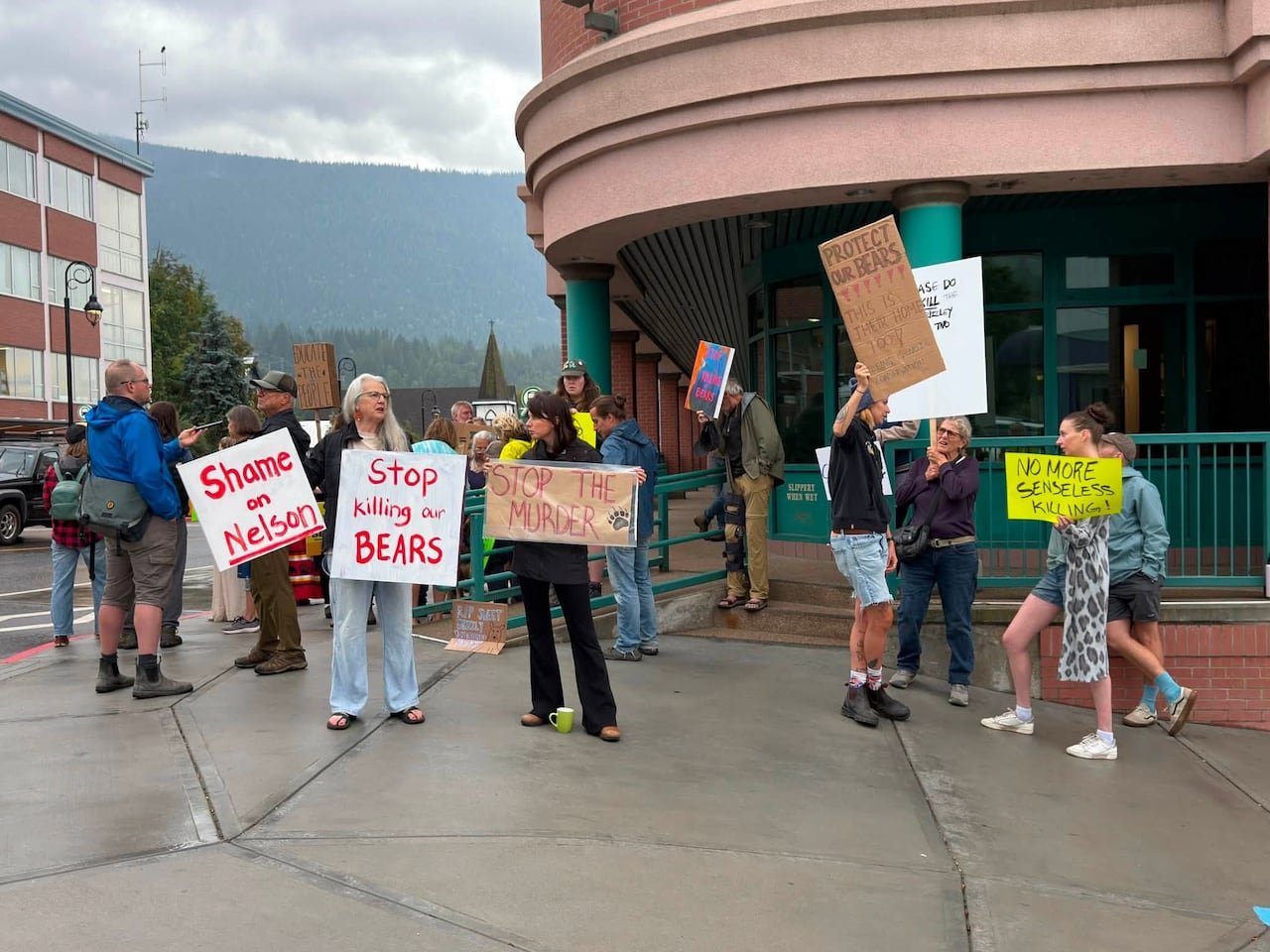
A demonstration was held in Nelson, B.C., on Thursday to voice opposition to the decision made by the B.C. Conservation Officer Service to euthanize a young grizzly bear.
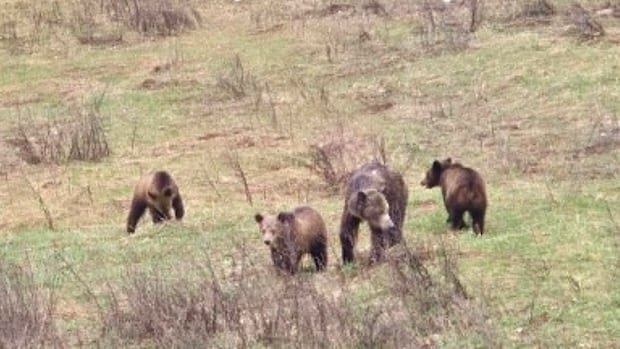
The bear was part of one of the two grizzly families frequently seen in and around Nelson, their images widely shared.
Katie Graves, founder of the non-profit Ursa Project Society, described the scene at the rally as emotional, with many tears and hugs exchanged.
Graves argued that the young grizzly, a yearling with a leg issue, should not have been put down, pointing out that it was mobile, kept pace with its family, and could feed itself.
She highlighted that despite the leg problem, the bear was able to move around efficiently, even though it favored one leg while running.
According to the B.C. Conservation Officer Service (BCCOS), the bear’s age, injury, and previous conflicts made rehabilitation or relocation unfeasible. The BCCOS did not elaborate on the nature of these conflicts.
The BCCOS stated, “It is regrettable when a bear with injuries, illness, or prior conflicts needs to be euthanized in a safe and humane manner. Such decisions are not taken lightly.”
Graves mentioned that the mother bear had initially brought cubs to the area in 2023, was relocated, and then returned shortly after.
While no information was provided regarding the status of the other grizzlies—a sow and two yearlings—the Conservation Service assured that any captured bears would be evaluated to determine the next course of action.
The incident sparked numerous comments on local Facebook groups, predominantly criticizing the decision to euthanize the bear.
Several individuals acknowledged the efforts of conservation officers to safeguard the public and expressed the need for better management of garbage to prevent bear encounters.
Wildlife biologist Clayton Lamb emphasized the importance of implementing stricter policies to reduce attractants and prevent conflicts with bears.
Lamb stressed the difficulty of rehabilitating habituated or food-conditioned bears, particularly those comfortable venturing into urban areas.
He emphasized the necessity of managing attractants to deter grizzly bears from entering communities.
The City of Nelson affirmed its commitment to mitigating conflicts and preserving the wild nature of bears by installing bear-resistant trash cans and conducting educational programs.
The city’s bylaw services are actively ensuring compliance with waste and wildlife attractant regulations and addressing issues like unsecured garbage and unmanaged compost.
Tag: rewrite-pending
<a href="https://www.cbc.ca/news/canada/british-columbia/nelson-grizzly-yearling-killed-9.7306936" target="_blank" rel