

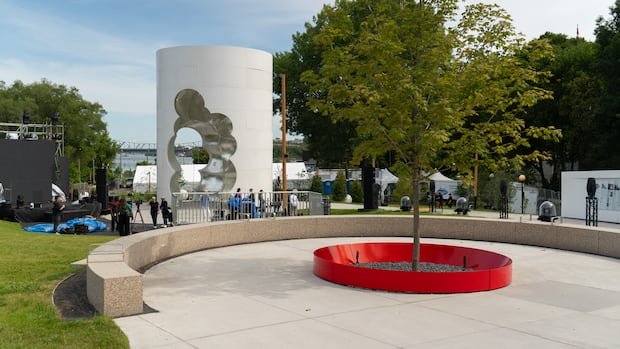

Thunderclouds loom near the Library and Archives Canada building in downtown Ottawa, signaling the arrival of a new national monument dedicated to the 2SLGBTQ+ community. Named Thunderhead, the monument stands as a striking nine-meter white column adorned with cloud-shaped openings.
Todd Ross, co-chair of the LGBT Purge Fund, described the design as featuring inverted clouds within the pillar, lined with mirrored tiles to create a dazzling disco ball effect. Situated at the intersection of Wellington Street and the Portage Bridge, Thunderhead aims to honor the struggles faced by 2SLGBTQ+ individuals nationwide, particularly during the Canadian government’s prolonged campaign known as the LGBT purge.
During the 1950s to the mid-1990s, the federal government conducted investigations and dismissed numerous employees from organizations like the RCMP, Canadian Armed Forces, and public service due to their sexual orientation. Ross, himself discharged from the Canadian navy in 1990 due to his homosexuality, later joined a class-action lawsuit against the government, with the lawsuit’s proceeds funding the monument’s construction.
The monument’s design, led by Liz Wreford from Architects Public City in Winnipeg, symbolizes destruction and renewal through thundercloud imagery. The column’s skylight and openings allow sunlight to create a kaleidoscope of colors within the mirrored interior, with flickering lights mimicking lightning flashes during a storm.
The surrounding park serves as an educational space shedding light on Canada’s history of anti-2SLGBTQ+ discrimination. A meandering path leads to an interpretive wall detailing this history, including the persecution of two-spirit individuals. Additionally, a healing circle formed by stones hand-picked by two-spirit elders from each province and territory offers a space for reflection.
Michelle Douglas, executive director of the LGBT Purge Fund, views the park as a beacon of hope, where visitors can reflect on their experiences and emotions. Like Ross, Douglas was discharged from the Armed Forces in 1989 and later sued the government, leading to a settlement in 1992 that ended the military’s purge. The site is intended to serve as a living monument, acknowledging past discrimination while looking towards a hopeful future.
In addition to the monument, the site includes a stage and areas for performances and gatherings, offering a versatile space for celebration and protest. The official opening ceremony will be attended by Gov.-Gen. Louise Arbour, with Capital Pride 2026 events commencing the following day and running until August 30.