

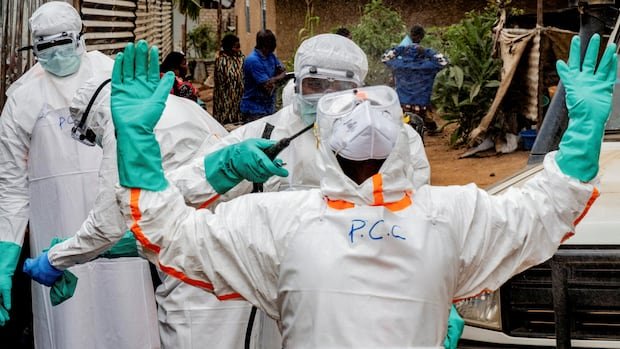

The Democratic Republic of Congo reported on Tuesday that the number of confirmed Ebola fatalities has reached 2,011, marking a significant milestone in what health experts have labeled as the most rapidly spreading outbreak ever documented. Recent figures from Congo’s public health institute, as reviewed by Reuters, also indicated a total of 4,381 confirmed cases spread across five provinces.
Factors such as delayed detection, ongoing conflict, and strained healthcare services have contributed to the accelerated transmission of the virus compared to previous outbreaks. This current outbreak, the 17th in Congo, is attributed to the Bundibugyo strain of Ebola, for which no approved vaccines or treatments are available. The World Health Organization has classified the outbreak, which has also resulted in cases in neighboring Uganda, as a public health emergency of international concern.
According to a recent report published in the journal Science, potential transmission could have started as early as January in Ituri province, with more than 500 suspected cases identified between mid-January and May 15. The shortage of medical resources and security challenges in affected regions have complicated efforts to trace contacts, isolate patients, and control the spread.
Data from the Congolese government reveals that the current outbreak is second only to the 2014-2016 Ebola epidemic in West Africa, which recorded 28,616 cases and 11,310 deaths across Guinea, Liberia, and Sierra Leone. Unlike the previous outbreaks, this current crisis in Congo has seen a quicker escalation in fatalities, surpassing the 2,000-death mark in less than three months.
Addressing community resistance and mistrust, which have posed obstacles to containment efforts, a task force supported by local militias has been established in Butembo, North Kivu province. This collaborative initiative aims to protect Ebola response workers and enforce quarantine protocols for individuals suspected of exposure to the virus. The task force, led by Guy Ngavo, highlighted the enforcement of measures, including transporting non-compliant individuals to treatment centers and the possibility of sanctions for repeated violations.